Introduction
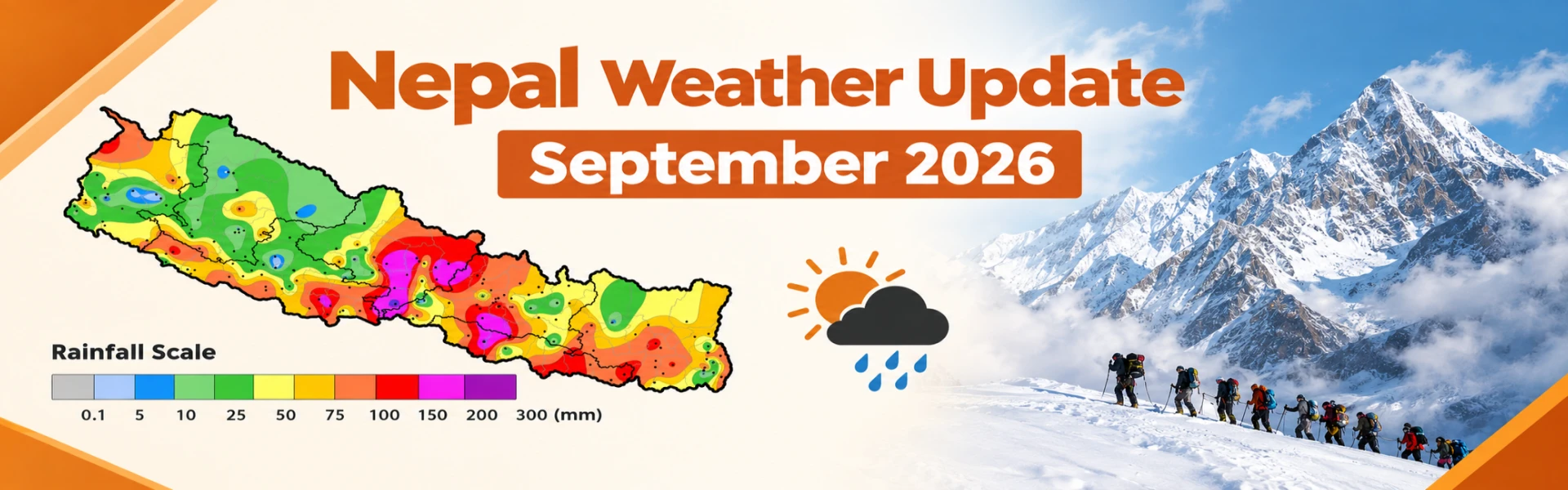
If you are arriving in Nepal for a trip or a trek this week between 24-28 September 2026, you may have heard about the current weather situation in the country. In short, many parts of Nepal are experiencing heavy rain and high altitude snowfall, with an official advisory in place from September 24 to 28, while many other areas and trekking routes remain unaffected. This Nepal weather update September 2026 explains what is known so far, based on official and verified news sources, so you can plan your trip with clear and accurate information.
At Thamel Travels and Tours, we work with international travelers, trekkers, and climbers throughout the year, including during the busy autumn trekking season. This article brings together the latest confirmed details about rainfall, snowfall, and trekking conditions in Nepal, along with practical safety advice for anyone traveling here in September 2026.
Nepal Weather Snapshot: 24-28 September 2026
Area | Reported Weather Concern | Source |
Koshi, Bagmati, and Gandaki provinces | Increasing rainfall linked to a developing low pressure system | Department of Hydrology and Meteorology |
Trekking and mountain areas nationwide | Government advisory urging caution from September 24 to 28 | Department of Tourism, via Nepal News |
Manaslu region, Gorkha district | Heavy snowfall and continuous rainfall affecting mountaineering activity | Onlinekhabar |
Kathmandu Valley and hill areas | General rain and possible travel delays during the advisory period | Nepal Tourism Board |
Latest Nepal Weather Update for September 2026
According to Nepal's Department of Hydrology and Meteorology, a low pressure system that formed over the North Andaman Sea has moved toward the central Bay of Bengal and is expected to become stronger. As a result, rainfall is expected to increase in Koshi, Bagmati, and Gandaki provinces. This is the main reason for the current weather forecast in the eastern and central parts of Nepal.
Separately, Nepal's Department of Tourism has asked trekkers, mountaineers, and support teams to stay alert from September 24 to 28, according to Nepal News. This nationwide advisory reflects concerns about heavy rain and rising rivers during this period, but it does not mean that all areas or trekking routes will be affected in the same way. For the latest official information, travelers should check the Nepal Tourism Board latest travel updates page directly.
Heavy Rainfall and Weather Advisory in Nepal
The heavy rain in Nepal reported for this period is not limited to one valley or district. The Department of Hydrology and Meteorology has pointed to increasing rainfall across Koshi, Bagmati, and Gandaki provinces, and the Department of Tourism's advisory, reported by Nepal News, warns of the need for caution in trekking areas nationwide during the advisory period.
A nationwide advisory does not mean that every district or trekking trail is experiencing the same amount of rainfall. Kathmandu Valley, the Terai lowlands, the mid hill regions, and the high Himalayan areas can experience different conditions from the same weather system. Therefore, it is important to check the weather and travel conditions for your specific destination rather than relying only on general weather reports.
Snowfall in Nepal's High Himalayan Areas
Snowfall in Nepal at this time of year is mainly a concern for higher Himalayan elevations rather than the whole country. Reports from the Manaslu region confirm that snow has been accumulating at higher elevations as part of the same weather pattern bringing rain to lower areas.
Snow at high altitude behaves differently from rain at lower elevations. Even a moderate snowfall can quickly build up on high passes, exposed ridgelines, and glacier approaches, since these areas are already close to freezing for much of the year. Fresh snow can also reduce trail visibility, cover crevasses on glaciated terrain, and make walking more difficult. This is why high altitude snowfall in Nepal is taken seriously by trekking operators, even when the amount of snow may seem small compared to rainfall in the hills.
Manaslu Weather and Snowfall Update
According to a report by Onlinekhabar published on September 22, 2026, climbers attempting to climb Mount Manaslu, the world's eighth highest mountain, have started returning from their expeditions because of heavy snowfall and continuous rainfall. A local ward representative from Samagaun, the village near Manaslu Base Camp, said climbers started returning after nearly two weeks without better weather. Continuous rainfall in the area has also caused significant snow buildup around the region.
Not every climber has left the area. The same report said that many climbers remained near Manaslu, with only some returning so far. Around 500 climbers had received permits for Manaslu this season. This Manaslu snowfall situation is specific to the mountaineering region and should not be taken as an indication that trekking routes across the rest of Nepal are facing the same conditions.
How the Weather Can Affect Trekking in Nepal
Heavy rain and high altitude snowfall can affect a trek in several practical ways.
Heavy rain can make stone stairways and forest trail sections slippery, especially in lower and mid hill areas.
Rain or snow can reduce visibility and make route finding more difficult on exposed ridges and mountain passes.
Continuous rainfall can increase the risk of landslides on steep and saturated slopes.
River and stream crossings can become more difficult when water levels rise quickly.
Snow accumulation at higher elevations can slow progress on passes and glacier approaches.
Mountain flights can be delayed or cancelled when weather conditions affect visibility and airstrips.
Road travel to trailheads can be delayed where landslides or flooding affect highways.
Itineraries may need adjustment, including extra rest days, to accommodate changing conditions safely.
Not every trek will experience all of these effects. The actual conditions depend on the specific region, elevation, and how the weather develops over the coming days.
Trekking Regions to Check Before Your Trip
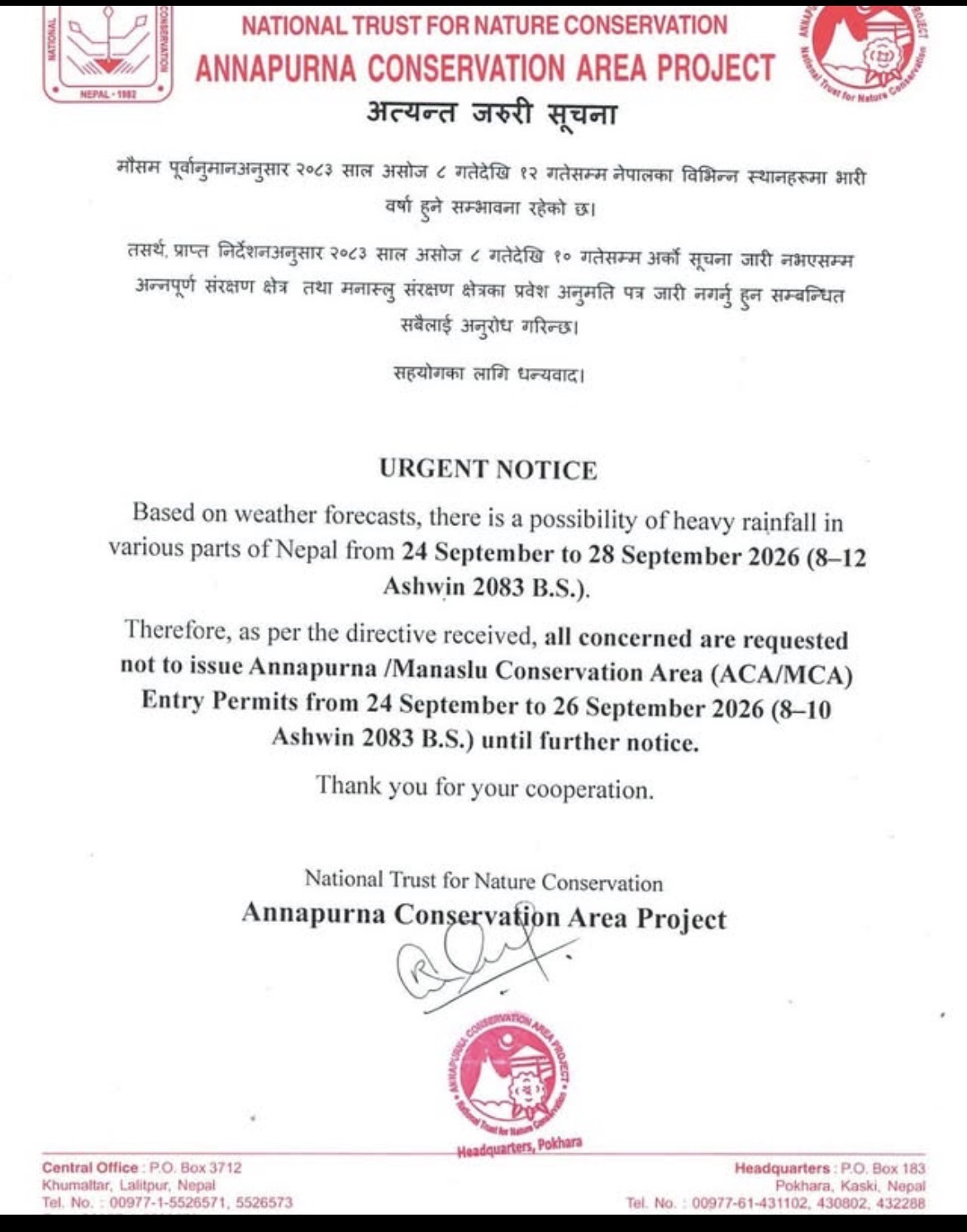
Nepal's major trekking regions cover very different geography, so weather conditions in one region do not automatically apply to another. During the current advisory period, concerns have been reported in parts of the Manaslu, Annapurna, Manang, and Mustang regions, where heavy rain at lower elevations and snowfall at higher elevations may affect trail conditions. Travelers should check the latest weather and local trail conditions before starting a trek.
For Everest trekking, Annapurna Base Camp Trek, Annapurna Circuit Trek, Mardi Himal Trek, Kanchenjunga trekking, and Langtang Valley Trek, conditions can vary by location and elevation. The current advisory does not mean that every route is closed, but high altitude areas may experience snowfall, while lower sections may face rain, landslides, or slippery trails. Travelers should confirm current conditions with their trekking agency or guide before departure and remain prepared for possible itinerary changes.
Is It Safe to Trek in Nepal During This Weather?
There is no simple yes or no answer to this question. Safety during this period depends on several factors together, including the specific destination, the altitude of the route, current weather on the day of travel, current trail conditions, official government advisories, and the guidance of experienced local trekking professionals who understand how a route responds to changing weather.
Destination: Regions with reported concerns, such as Manaslu, Annapurna, Manang, and Mustang, require more caution.
Altitude: Higher elevations are more exposed to snowfall and sudden weather changes.
Current weather: Conditions on the actual day of travel are more important than general seasonal expectations.
Trail conditions: Trails may be muddy, covered with snow, or affected by recent landslides.
Official advisories: Guidance from the Department of Tourism and Nepal Tourism Board should be given priority.
Local expertise: Experienced guides can assess specific route conditions better than a general weather forecast.
What Trekkers Should Do Before Starting a Trek
Check the latest official weather and travel updates from the Nepal Tourism Board and Department of Hydrology and Meteorology.
Confirm current trail conditions for your specific route with your trekking agency or guide.
Stay in regular contact with your guide or agency throughout the trek.
Carry appropriate rain gear and cold weather clothing, even for treks not usually associated with snow.
Allow flexibility in your itinerary, including possible extra rest days.
Keep emergency contacts, including your agency's local number, easily accessible.
Follow instructions from local authorities and conservation area offices.
Avoid unnecessary risks during periods of intense rainfall or snowfall.
Check domestic flight conditions in advance if your itinerary depends on mountain airstrips.
How Thamel Travels and Tours Can Help
As a Nepal based travel and trekking agency, Thamel Travels and Tours helps travelers plan trekking routes, cultural tours, transportation, and guide services across Nepal, Bhutan, Tibet, and North India. During periods of changing weather, our team can assist with itinerary adjustments, local travel information, and coordination with guides and local partners on the ground.
If you are planning a trip during the Nepal travel advisory period 24-28 September 2026, Please stay alert while on long distance road journey or high altitude trekking adventure. For travelers who prefer a more flexible itinerary instead of focusing on one trekking route, a Nepal tour can provide an alternative way to explore the country while weather conditions in higher elevation areas change.
Travel Advice for International Visitors to Nepal
If you are arriving in Nepal during this period, a few practical steps can help. Check official updates from the Nepal Tourism Board before finalizing your itinerary, and again shortly before departure. Allow extra time between connecting flights or transfers, since domestic flights can be affected by weather. Keep your schedule flexible instead of booking every day tightly, especially for trips that include high altitude areas. Stay in regular contact with your local travel agency for the latest information about conditions at your destination.
Frequently Asked Questions
Is Nepal safe to visit during heavy rain in September 2026?
Nepal as a whole is not closed or broadly unsafe. Reported rainfall and snowfall are affecting specific regions and time periods, particularly September 24 to 28. Travelers should check conditions for their specific destination and follow official guidance.
Is September a good time for trekking in Nepal?
September marks the start of the autumn trekking season, traditionally one of the most popular times to trek in Nepal. This year's unsettled weather in parts of the country means travelers should build in extra flexibility and check current conditions before departure.
Is there snowfall in Nepal in September?
Snowfall in September is generally limited to higher Himalayan elevations rather than lower hill areas or cities. Current reports indicate snowfall in higher altitude regions during this period.
Is Manaslu trekking affected by heavy snowfall?
Reporting from Onlinekhabar indicates that heavy snowfall and continuous rainfall have affected mountaineering activity around the Manaslu base camp, with some climbers returning from the area. Conditions for lower elevation sections of the Manaslu trekking route may differ, so travelers should confirm current status with their agency.
Can heavy rain affect trekking routes in Nepal?
Yes. Heavy rain can make trails slippery, increase landslide risk on steep slopes, and make river crossings more difficult in affected areas. The extent varies by region and elevation.
Can bad weather affect domestic flights in Nepal?
Yes. Domestic flights to mountain airstrips are often among the first services affected by poor weather, since many routes depend on clear visibility for takeoff and landing.
What should trekkers carry during rainy and snowy conditions?
Trekkers should carry proper waterproof outer layers, warm insulated clothing suitable for cold temperatures, and sturdy footwear appropriate for wet or snowy trail conditions, along with their standard trekking gear.
Where can travelers find the latest Nepal travel updates?
The Nepal Tourism Board publishes official travel updates, which travelers should check regularly. Trekking agencies, including Thamel Travels and Tours, can also provide current, route specific information based on local contacts.