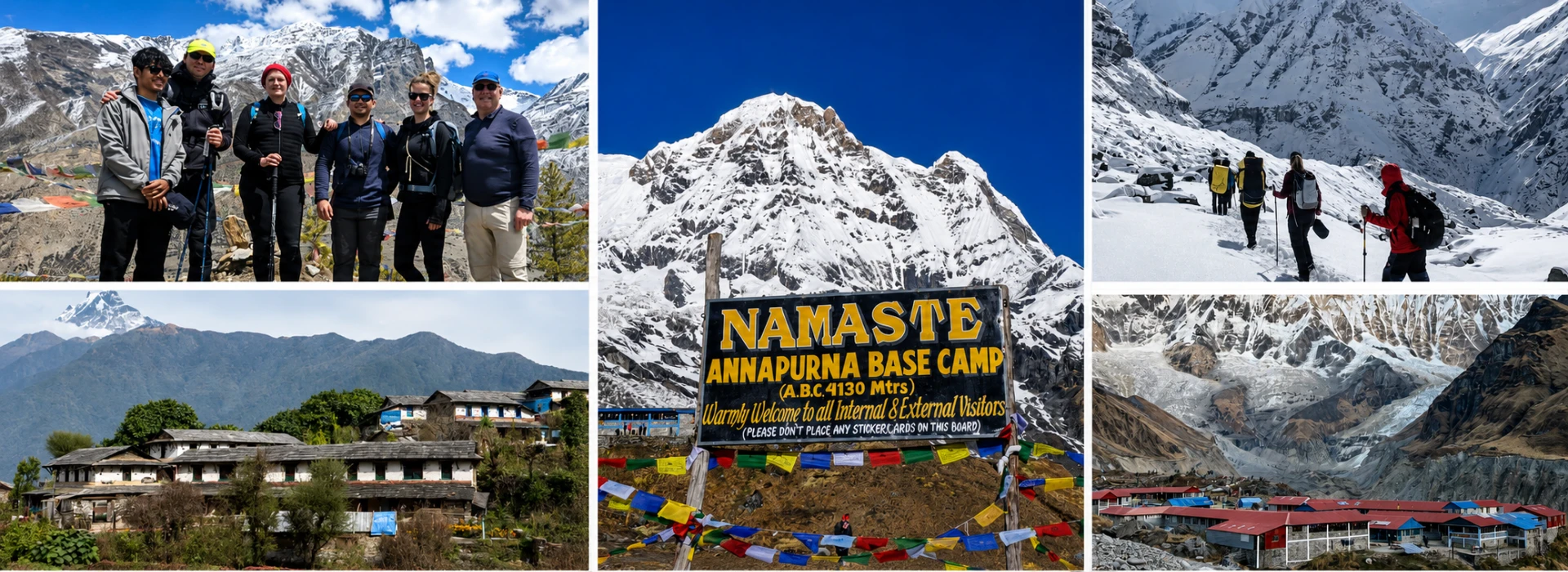
The highlight of the trek is reaching Annapurna Base Camp, situated at an altitude of 4,130 meters (13,549 feet). As you stand in awe of the majestic Annapurna massif, including the iconic peaks of Annapurna I (8,091 meters) and Machapuchare (6,993 meters), you'll realize the true grandeur of nature and the indomitable spirit of the mountains.
10 days Annapurna Case Camp Trek highlights
- Pokhara return flights to easy travel between Kathmandu and Pokhara.
- An exciting journey through Gurung Villages to Annapurna Base Camp
- Wake up at Annapurna Base Camp! Enjoy the Annapurna & Machhapuchhre base camp.
- Visit Phewa Lake, the lakeside bazaar, and the World Peace Stupa in Pokhara.
- A smooth stress-free guided trek on full board to Annapurna base camp
The 10-day Annapurna Base Camp Trek involves a stress-free journey with moderate trekking hours for six consecutive days. Among the 10 days, you will spend 5 nights in the Annapurna Himalayas, 2 nights in Kathmandu, and 2 nights in Pokhara, each night before and after the trek in both cities. This schedule allows you to do some city sightseeing and also greatly helps with trek preparations, as Kathmandu and Pokhara have several trekking shops to buy clothes and gear. A total of 10 days including arrival and departure days.
What to Expect on the Annapurna Base Camp Trek
The 10-day ABC Trek is one of the shortest routes to reach the heart of the Himalayas. Nestled in the magnificent Himalayas of Nepal, the Annapurna Base Camp Trek is an adventure that offers breathtaking landscapes, cultural encounters, and a thrilling experience for nature lovers and trekking enthusiasts. This trek takes you deep into the heart of the Annapurna mountain range, where you'll witness stunning views, towering peaks, and a sense of tranquility that can only be found in the lap of nature. You will have 4-star hotels in Kathmandu and Pokhara and mountain lodges during your 5-night stay in the Himalayas.
Spending five overnights in the Himalayas with stunning views of the Annapurna and Dhaulagiri ranges, you will enjoy the real beauty of the Himalayas. The culturally rich Gurung community inhabits the trekking trails. The journey to the Annapurna Sanctuary is a cultural trek, exploring the welcoming Gurung villages while enjoying the Himalayas. The trip includes a regularly scheduled trekking activity and two drives between Kathmandu and Pokhara.
How do you travel on the 10-day Annapurna Base Camp trekking?
The 10-day incredible Annapurna Base Camp Trek, also known as the ABC Trek, is specially designed as a small group tour. The small group tour is limited to a maximum of 10 guests per group. This will help to ensure intimate and personalized experiences for the trekkers.
How to Prepare for the Annapurna Base Camp Trek
Although the trek is suitable for most individuals with a reasonable level of fitness, it's important to be prepared for the demands it presents. The trail involves daily walking of 6–8 hours on average. The easiest way to understand the route is that you will start at 1600 meters at Jhinu Bridge and trek to 4100 meters in just 3 days! So the trekking trail involves several ups and downs. The best preparation is fast walking for at least one hour every day for a month or more; every one of any age normal health can do it. Carrying a complete set of required trekking gear is very important as well.
Know Before You Book
Visa Requirements: All citizens of the world except Indian passport holders need a visa to enter Nepal, and most travelers can get a Visa on Arrival. A 15 day tourist visa fee is USD 30. We recommend applying online beforehand to save time at the airport.
Passport Validity: Please make sure your passport is valid for at least six months from your arrival date, with at least one blank page for your visa stamp.
Required Permits: This trek requires the Annapurna Conservation Area Permit, both of which are included in your trip cost.
Fitness Level: This trek reaches 4,130m at Annapurna Base Camp, with daily trekking of around 6 hours, so a reasonable level of fitness is recommended. We suggest at least a month of preparation, such as brisk walking for an hour daily.
Recommended Vaccinations: No specific vaccinations are required for this trek, though we recommend consulting your doctor beforehand, especially regarding altitude related health advice.
Travel Insurance: Travel insurance covering emergency evacuation is essential for this trip. We're happy to recommend providers if needed.
Currency & Payment Methods: We accept payments in USD, EUR, GBP, AUD, and other major currencies. For international bookings, we recommend paying in US Dollars.
Accommodations, Meals & Transportation
Typical Accommodation Used: 4 nights in 3+ star hotels in Kathmandu and Pokhara with breakfast included, plus 5 nights in mountain lodges in the Himalayas on a full board basis.
Meals: 9 breakfasts, 6 lunches, and 9 dinners are included. Breakfast and dinner daily, and lunch during the trekking days.
Availability During Peak Seasons: Spring (March to May) and autumn (September to November) are the busiest trekking seasons, and lodges can fill up quickly. We recommend booking well in advance.
Porter and Guide Support: One trek leader and one assistant leader accompany the group throughout the journey, with one porter shared between every two trekkers to help carry your gear. Each trekker also receives a complimentary duffle bag, a pair of trekking poles, and a sleeping bag for the duration of the trek.
Transportation: 2 individual airport transfers by private car or van, 4 group airport transfers by van, round trip Kathmandu to Pokhara flights, and a private jeep transfer between Pokhara and Jhinu.
Arrival Information
Airport Pickup Details: We will wait to welcome you outside the arrival terminal with our company name and logo board along with your name. After you clear immigration and collect your luggage you will find us just outside the arrival terminal building. Then transfer you to your hotel in Kathmandu.
Trip Briefing: On Day 1 at 5 PM, we'll hold a full trip briefing covering the route, altitude considerations, gear checklist, and any last minute questions.
Emergency Contact Numbers: Please note - a 24 hour emergency support will be available on + 977 9841697870.
Seasonal & Weather Updates
Best Trekking Seasons: Spring and autumn generally offer the clearest skies and most stable trail conditions.
Winter Conditions: Winter brings cold temperatures at altitude, particularly in the higher sections near Annapurna Base Camp.
Monsoon Conditions: Monsoon season can bring rain in the lower valleys and possible snow up high.
Weather at Altitude: Conditions can change quickly once you're above 4,000m, so flexibility in your schedule is important, particularly around the final approach to Annapurna Base Camp.
Health & Safety
Altitude Sickness: This trek reaches 4,130m at its highest point, so a gradual ascent is built into the itinerary. Please tell your guide immediately if you experience any symptoms of altitude sickness.
Drinking Water: We recommend using a reusable water bottle with purification tablets or a filter rather than buying bottled water, since bottled water becomes expensive and harder to find at higher elevations.
Emergency Assistance: Should any emergency arise at altitude, our team can arrange helicopter evacuation, which is why comprehensive travel insurance is essential.
Healthcare Facilities: Basic health posts exist in some villages along the route, but serious medical issues at altitude require evacuation to Kathmandu or Pokhara.
Packing Checklist
Essential Clothing: Layered clothing is key, including a warm down jacket, thermal base layers, trekking pants, and a good pair of broken-in trekking boots.
High Altitude Gear: A warm sleeping bag (provided by us), gloves, a warm hat, and sunglasses with UV protection are all essential for the higher sections of the trek.
Day Trek Essentials: A daypack, reusable water bottle, water purification tablets, sunscreen, and a headlamp are all useful for daily trekking.
Personal Medications: Please bring any personal medications, along with any altitude sickness medication recommended by your doctor.
Important Notices
Travel Advisories: Before travelling, we recommend checking the latest travel advice issued by your home country. We're always happy to provide local travel updates related to this itinerary.
Permit Regulations: This trek requires the Annapurna Conservation Area Permit, included in your package. Your guide will carry this and explain any checkpoint procedures along the route.
Trail Conditions: Trail conditions can change due to snowfall, landslides, or seasonal wear. Your guide will always choose the safest available route.
Group Safety: Please follow your guide's instructions at all times, especially around high altitude sections of the trek.
Responsible Trekking: We encourage all trekkers to respect local customs, avoid littering, and support responsible tourism throughout the Annapurna Conservation Area.
Know Before You Go
Travel Preparation Information: Before travelling, please ensure your passport is valid for at least six months, your Nepal visa arrangements are complete, and your travel insurance is active.
Latest Travel Advice for This Trek: Trail conditions and weather can occasionally change depending on the season. Feel free to contact us before your departure, and we will provide the latest updates and recommendations to help you make the most of your 10 day Annapurna Base Camp Trek.