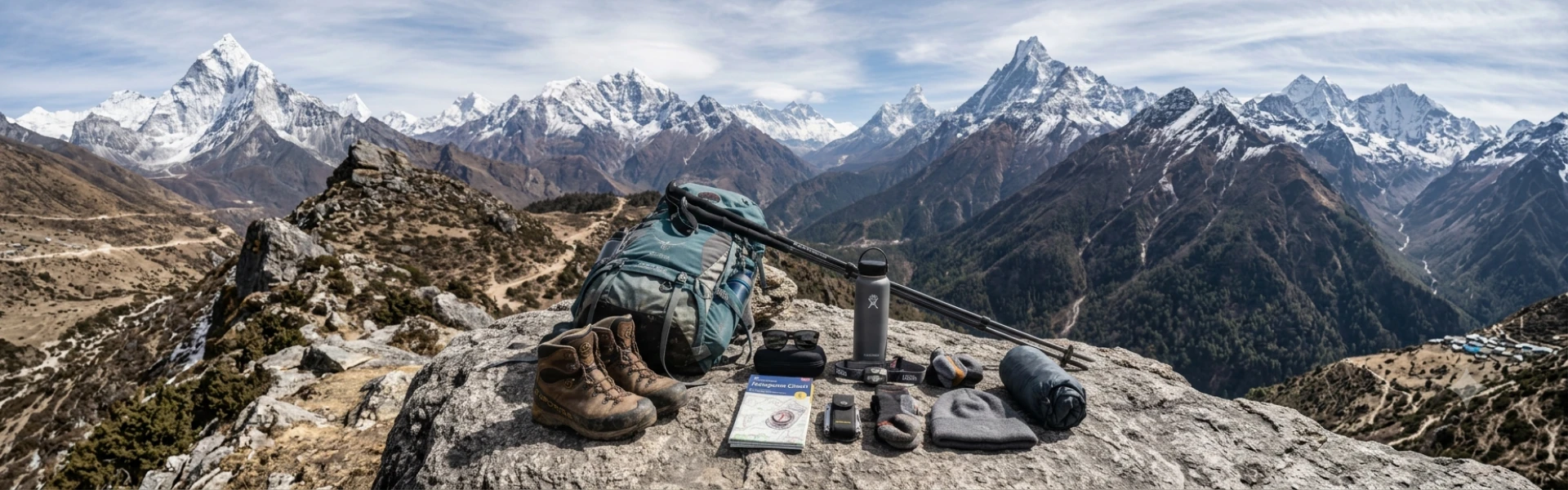
Introduction
Getting your packing list right in Nepal matters more than in most places. You might start a trek in shorts and end it in a down jacket, all in the same week, as you climb from the warm terraces around Pokhara to a windswept pass above 4,000 meters. This guide breaks down exactly what to bring for a Nepal trek or tour, organized by season and by where each item actually lives on your body: what you wear on the trail, what porters carry for you, and what stays in your day pack for quick access.
Whether you're heading to Everest Base Camp, Annapurna Base Camp, or joining one of our cultural tours around Kathmandu, the core list below applies. We've noted where trekking-specific gear differs from what a Kathmandu or Chitwan tour requires.
What to Pack by Season
Nepal's climate shifts dramatically across the year, and your packing list should shift with it.
Autumn and spring (September to November, March to May): This is peak trekking season, and the packing is the easiest of the year. Regular hiking clothes work fine during the day. Mornings and evenings still carry a chill, so bring a windproof layer you can throw on at camp or before sunrise starts. You won't need heavy winter gear, but don't skip the layers entirely, since temperatures can drop fast once the sun goes down at altitude.
Winter (December to February): Pack a proper warm jacket and insulated trousers. Winter is quieter on the trails and a genuinely good time to explore the Kathmandu and Pokhara valleys or the lowland national parks, where the weather stays mild even when the mountains turn cold.
Monsoon (June to August): A rain cover for your pack, or an umbrella, is non-negotiable. Trails get slick and leeches show up in the lower, wetter forests, so quick-dry clothing helps. Mosquito repellent is worth packing too, particularly if your trip includes Chitwan or other lowland areas.
Trekking Clothing: What You Wear on the Trail
This section covers the layering system for treks like Everest Base Camp, Annapurna Base Camp, and the shorter routes through the Annapurna foothills. These are the clothes you'll actually be walking in each day.
Waterproof hiking boots with ankle support. Break these in before you leave home. Boots that haven't been worn on a few practice hikes are the single biggest cause of blisters on the trail, and a blister on day two of a ten-day trek is a miserable thing to manage.
Hiking pants or leggings. Any comfortable, breathable hiking pants work. Softshell or convertible trekking pants are popular choices since they handle temperature swings well.
Moisture-wicking t-shirts. Pack a few for layering under your fleece or jacket. Synthetic or merino wool fabrics dry faster than cotton and won't leave you cold and damp after a sweaty climb.
Long-sleeved tops. A fleece top or a lightweight wool jumper works well as a mid-layer once the trail climbs above 3,000 meters.
Trekking socks. Get a genuinely good moisture-wicking pair for actual walking hours, plus a separate set of regular socks to change into once you reach the teahouse for the day.
A down jacket. This is essential above the mid-altitude villages, especially on routes like Annapurna Base Camp or anywhere near Everest. Buy or rent a quality one, since a cheap down jacket that loses its loft is not something you want to discover at 4,000 meters.
A warm hat and sunglasses. A simple wool hat, easy to find in Thamel before you leave Kathmandu is enough for most nights. Sunglasses matter more than people expect. Himalayan sun at altitude, especially reflecting off snow, is genuinely hard on unprotected eyes.
Fleece-lined gloves. Mornings and evenings on the trail get cold enough that bare hands become uncomfortable fast.
A baseball cap. Useful during the day to keep sun off your face, separate from the warm hat you'll want at night.
A fleece buff. Doubles as a neck warmer, an ear cover, or a light face shield against wind and trail dust.
Flip-flops or camp shoes. Once the day's walking is done, your feet will thank you for getting out of hiking boots. Pair with warm socks in the evening.
The Main Pack: What Your Porter Carries
On most Nepal treks, porters carry your main duffel bag while you carry only a light day pack. Here's what belongs in that main bag.
Sleeping bag. A 4-season, or even 5-season, sleeping bag is necessary for most base camp treks. Thamel Travels and Tours includes sleeping bags for Annapurna Base Camp trekking as part of the package. If you'd rather bring your own or rent one locally, our guides can help you buy or hire gear in Kathmandu or Pokhara before you set off.
A sleep sheet. Cotton, silk, or thermal, this isn't strictly necessary, but it adds a small sense of familiarity to a different teahouse bed every night.
Comfortable non-trekking pants. Something with pockets for the evenings, mornings, and lodge downtime after the day's walking is done.
Long-sleeved thermal tops. Useful for evenings and mornings, particularly the higher you climb.
Thermal long johns. Worn under your regular pants at night and in the early morning cold.
A lightweight, quick-dry towel. Hot showers are one of the small luxuries of the Annapurna trail, and a towel that dries fast is far more practical than a bulky cotton one that never quite dries between uses.
Day Pack Essentials
Your day pack should sit on your back throughout the trekking day, ideally with a hip belt and chest strap to take weight off your shoulders. Everything you might need on short notice goes here.
A fanny pack or bum bag. Handy for anything you want within arm's reach: toilet paper, hand sanitizer, your phone, lip balm, sunglasses, and a snack bar. A zip-lock bag inside it keeps your passport and cash dry if the weather turns.
A lightweight waterproof pant. Cheap insurance against a wet, cold afternoon. Hiking for hours with soaked legs is not something you want to repeat.
A wind- and water-resistant jacket. Best for lower altitudes where the wind bites but it isn't yet genuinely freezing.
Cash. Meals are included on most Annapurna Base Camp packages, but you'll still need cash for snacks, extra meals, toilet paper, drinking water, hot showers, device charging, and WiFi along the trail. There are no ATMs or card payment options once you're on the trekking route.
A battery pack. Charging points at teahouses can mean a queue and a per-hour fee. A power bank means you're not waiting around or paying twice.
Toilet paper. Almost no toilet along the trail stocks it. You can buy more at teahouses as you go, but carry your own to start with.
A water bottle. Staying hydrated affects how well you handle the altitude, so it's worth taking seriously. A two-liter insulated bottle is a good size, since stopping constantly to refill gets old fast.
Water purification tablets. Filtered water is usually available to buy in teahouses and shops along the trail, but tablets let you top up from tap water when needed.
Trekking poles. Thamel Travels and Tours provides a pair for every trekker on Annapurna Base Camp trips. They make a real difference on the stone stairs that make up a large share of the route. Bring your own if you already have a pair you like.
A head torch. You won't need it as often as trekkers did a decade ago, but it's essential for a pre-dawn hike up to Poon Hill and for finding your way to the toilet if the lodge's power cuts out overnight.
Hand sanitizer. Standard practice now, both on the trail and during city sightseeing days.
A basic medical kit. Even on holiday and in good shape, it's worth carrying something for blisters, cuts, an upset stomach, sprains, sunburn, and headaches. Common items trekkers pack include ibuprofen, paracetamol, electrolyte tablets, anti-diarrheal medication, anti-inflammatory cream, blister plasters, and strapping tape. Diamox is worth discussing with your doctor before the trip if you're trekking above 3,500 meters, since it helps with altitude acclimatization.
Sunscreen, lip balm with SPF, and moisturizer. The combination of cold wind and strong, unfiltered sun at altitude is harder on skin than most people expect before their first trek.
Sanitary products. Worth packing regardless of how likely a period is during the trip, since none of this is available along most trekking routes.
Nepal Tour Packing List (Non-Trekking)
If you're joining a cultural or sightseeing tour rather than a trek, such as our Kathmandu Valley heritage tour or a classical Nepal itinerary, you can leave most of the trekking-specific gear at home. Focus on comfortable walking shoes for temple visits and old town streets, layers for the season you're traveling in, a light rain jacket if you're visiting during monsoon, sun protection, and modest clothing that covers shoulders and knees for temple and monastery visits.