 Overview
Nepal is a country in South Asia, bordered by China's Tibet Autonomous Region to the north and India on the east, south, and west. It is home to eight of the world's 14 peaks above 8,000 metres, including Mount Everest with a population of roughly 30 million people in an area of 147,516 square kilometers. Demographically it is made up of more than 125 ethnic and caste groups speaking over 120 languages.
Tourism is a core pillar of the economy, built on cultural and spiritual travel, trekking, mountaineering, and wildlife safaris. People have adopted a way of life that blends Hindu and Buddhist traditions with warm, welcoming hospitality toward visitors.
Politically, Nepal was a Hindu kingdom for over two centuries until the monarchy was abolished in 2008; it is now governed as a Federal Democratic Republic under the 2015 constitution, with a ceremonial President as head of state and a Prime Minister who leads the government through the House of Representatives.
History of Tourism in Nepal
Tourism in Nepal began to develop after the country opened its doors to international visitors in the early 1950s. The first successful climber of Mount Everest by Sir Edmund Hillary and Tenzing Norgay in 1953 brought global attention to Nepal as a premier adventure travel destination. Since then, trekking, mountaineering, cultural tourism, wildlife experiences, and spiritual travel have become major pillars of the country's tourism industry, contributing significantly to Nepal's employment, economy, and international recognition. As for 2026, Nepal is expected to receive 1.3 million international visitors.
Regional Connectivity
Nepal is well connected to international and regional destinations through a network of international airports and open land border crossings. Tribhuvan International Airport (TIA) in Kathmandu serves as the country's primary international gateway, handling the majority of international flights and passenger traffic. Gautam Buddha International Airport (GBIA) in Bhairahawa and Pokhara International Airport (PIA) are Nepal's other international airports, gradually expanding their international operations and improving regional connectivity.In addition to air travel, Nepal shares an open border with India, allowing easy overland access through 6 major border crossings with immigration facilities, making travel convenient for visitors from neighboring countries.
Major Tourist Regions of Nepal
Nepal offers an extraordinary diversity of travel experiences, from the snow-capped Himalayas and ancient cultural cities to subtropical jungles and sacred pilgrimage sites. Each region has its own unique attractions, making Nepal one of the world's most diverse travel destinations. Whether you're seeking high-altitude trekking, wildlife safaris, cultural heritage, spiritual journeys, or luxury holidays, every region provides unforgettable experiences for different types of travelers.
Major Tourist Regions of Nepal
Region | Major Destinations | Best Known For | Popular Activities |
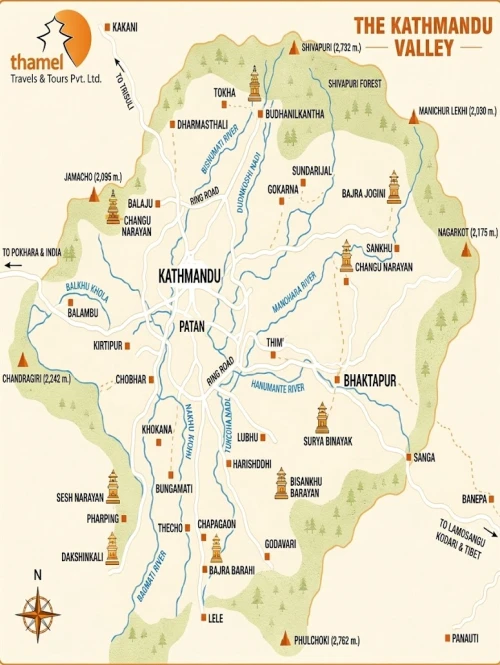
Kathmandu Valley | Kathmandu, Bhaktapur, Patan, Kirtipur | UNESCO World Heritage Sites, ancient temples, vibrant culture | Sightseeing, cultural tours, festivals, food tours |
Everest (Khumbu) Region | Everest Base Camp, Namche Bazaar, Tengboche, Gokyo Lakes | Mount Everest, Sherpa culture, Himalayan trekking | Trekking, mountaineering, helicopter tours |
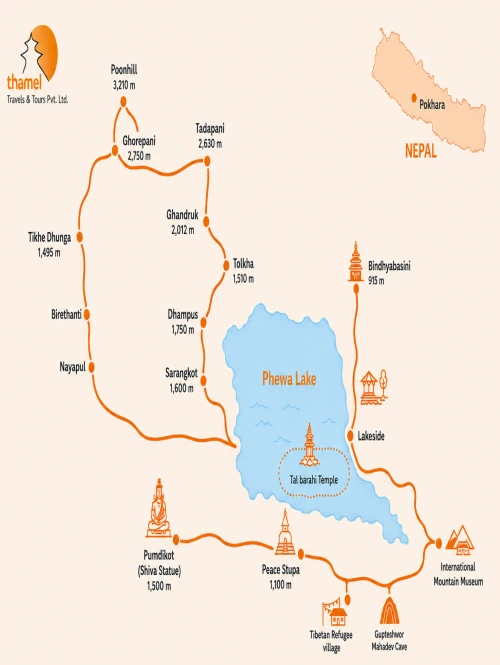
Annapurna Region | Pokhara, Annapurna Base Camp, Annapurna Circuit, Ghorepani, Poon Hill | Diverse trekking routes, mountain scenery, adventure activities | Trekking, paragliding, boating, mountain flights |
Langtang Region | Langtang Valley, Kyanjin Gompa, Gosainkunda | Alpine landscapes, Tamang culture, less-crowded trekking | Trekking, photography, cultural experiences |
Manaslu Region | Manaslu Circuit, Samagaun, Larkya La Pass | Remote Himalayan wilderness, restricted trekking area | Trekking, mountaineering |
Mustang Region | Upper Mustang, Lo Manthang, Jomsom, Muktinath | Tibetan culture, desert landscapes, ancient monasteries | Jeep tours, trekking, pilgrimage, photography |
Terai Region | Chitwan National Park, Bardia National Park, Koshi Tappu | Wildlife, jungles, birdwatching | Jungle safari, canoeing, birdwatching |
Lumbini Region | Lumbini | Birthplace of Lord Buddha and UNESCO World Heritage Site | Pilgrimage, meditation, cultural sightseeing |
Far Western Nepal | Rara Lake, Khaptad National Park | Remote nature, pristine lakes, off-the-beaten-path adventures | Trekking, camping, nature photography |
Eastern Nepal | Ilam, Kanchenjunga Region, Taplejung | Tea gardens, Kanchenjunga, rural landscapes | Trekking, tea tourism, village experiences |
Easily Accessible Tourist Destinations in Nepal
Destination | Accessibility | Best Known For | Suitable For |
Kathmandu Valley | Tribhuvan International Airport and excellent road connections | UNESCO World Heritage Sites, culture, history, festivals | All travellers |
Pokhara | Domestic flights (approximately 25–30 minutes) or a 6–8 hour scenic drive from Kathmandu | Lakes, mountain views, adventure sports | Families, couples, adventure seekers |
Chitwan National Park | Domestic flights to Bharatpur or a 5–6 hour drive from Kathmandu or Pokhara | Wildlife safaris, jungle activities, Tharu culture | Families, wildlife enthusiasts |
Nagarkot | About a 1.5–2 hour drive from Kathmandu | Himalayan sunrise and mountain panoramas | Short trips, couples, photographers |
Bandipur | Around a 4–5 hour drive from Kathmandu or 2–3 hours from Pokhara | Traditional Newari town, heritage, scenic landscapes | Cultural travellers, families |
Lumbini | Domestic flights to Gautam Buddha International Airport or a 7–9 hour drive from Kathmandu | Birthplace of Lord Buddha (UNESCO World Heritage Site) | Pilgrims, cultural travellers |
Geographical Areas of Adventure Tourism
Nepal's adventure tourism is concentrated in the Himalayan regions, river valleys, and mountain landscapes. The Everest (Khumbu), Annapurna, Langtang, Manaslu, and Mustang regions are internationally renowned for trekking, mountaineering, and peak climbing. Nepal's major rivers, including the Trishuli, Bhote Koshi, Kali Gandaki, Sun Koshi, and Seti, offer world-class white-water rafting and kayaking, while Pokhara is the country's leading destination for paragliding, zip-lining, bungee jumping, and other aerial adventure sports.
Adventure Region | Main Adventure Activities |
Everest (Khumbu) | Trekking, mountaineering, peak climbing |
Annapurna | Trekking, mountaineering, mountain biking |
Langtang | Trekking, hiking |
Manaslu | Trekking, mountaineering |
Mustang | Trekking, jeep expeditions, mountain biking |
Pokhara | Paragliding, zip-lining, bungee jumping, ultralight flights |
Trishuli River | White-water rafting, kayaking |
Bhote Koshi River | White-water rafting, kayaking, canyoning |
Kali Gandaki, Sun Koshi & Seti Rivers | Multi-day rafting and kayaking expeditions |
Popular Tourist Destinations
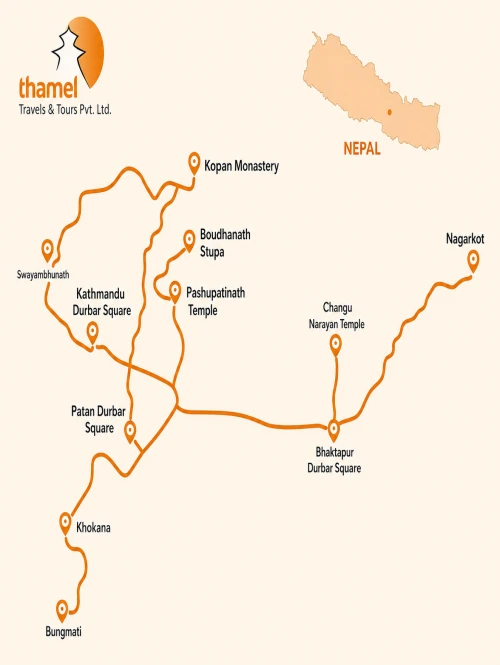
Nepal's most popular tourist destinations include the UNESCO World Heritage Sites of Kathmandu Durbar Square, Swayambhunath, Boudhanath, and Pashupatinath Temple; the scenic city of Pokhara and Phewa Lake; the renowned trekking regions of Everest and Annapurna; Chitwan National Park for wildlife safaris; Lumbini, the birthplace of Lord Buddha; and the picturesque hill towns of Bandipur and Nagarkot.
Destination | Best Known For |
Kathmandu Valley | Heritage, culture & UNESCO sites |
Everest Region | Trekking & Mount Everest |
Annapurna Region | Trekking & Himalayan scenery |
Pokhara | Lakes, adventure & gateway to Annapurna |
Chitwan National Park | Wildlife safaris |
Lumbini | Birthplace of Lord Buddha |
Bandipur & Nagarkot | Hill towns & Himalayan views |
Popular Tourist Routes
Nepal offers some of the world's most iconic trekking trails alongside scenic cultural and wildlife circuits. These routes showcase the country's spectacular Himalayan landscapes, rich cultural heritage, and diverse natural attractions.
Everest Base Camp Trek: Nepal's most famous trekking route, passing through Lukla, Namche Bazaar, Tengboche, and Kala Patthar before reaching Everest Base Camp.
Annapurna Circuit & Annapurna Base Camp Trek: Two of Nepal's most popular trekking routes, renowned for diverse landscapes, traditional mountain villages, and panoramic Himalayan views.
Langtang Valley Trek: A scenic Himalayan trek through Langtang National Park, known for alpine forests, glaciers, and Tamang culture.
Kathmandu – Pokhara – Chitwan Circuit: Nepal's classic sightseeing route, combining UNESCO World Heritage Sites, lakeside scenery, adventure activities, and wildlife safaris.
Kathmandu – Lumbini – Pokhara Circuit: A popular cultural route linking Kathmandu, Lumbini (the birthplace of Lord Buddha), and Pokhara, Nepal's leading leisure and adventure destination.
Top Spiritual Destinations in Nepal
Nepal is home to some of South Asia's most important Hindu and Buddhist pilgrimage sites, attracting millions of devotees and visitors each year.
Destination | Religious Significance |
Pashupatinath Temple, Kathmandu | One of the world's holiest Hindu temples dedicated to Lord Shiva and a UNESCO World Heritage Site. |
Swayambhunath Stupa, Kathmandu | One of Nepal's oldest and most sacred Buddhist stupas, revered by both Buddhists and Hindus. |
Boudhanath Stupa, Kathmandu | One of the largest Buddhist stupas in the world and an important centre of Tibetan Buddhism. |
Lumbini | Birthplace of Lord Buddha and a UNESCO World Heritage Site. |
Muktinath Temple, Mustang | A sacred pilgrimage site for both Hindus and Buddhists, located in the Annapurna region. |
Janaki Temple, Janakpur | A revered Hindu temple dedicated to Goddess Sita and closely associated with the Ramayana. |
Mount Everest: The World's Highest Peak
Standing at 8,848.86 metres (29,031.7 ft) above sea level, Mount Everest is the highest mountain on Earth. Located in Nepal's Khumbu (Everest) region within Sagarmatha National Park, it has long been the ultimate destination for mountaineers and adventure travellers. The mountain was first successfully summited on 29 May 1953 by Sir Edmund Hillary of New Zealand and Tenzing Norgay, a Sherpa mountaineer. Today, Everest attracts climbers from around the world during the spring climbing season, while thousands of trekkers visit Everest Base Camp each year to experience the spectacular Himalayan scenery without attempting the summit.
Government Focus on Wellness Tourism 2027
The Government of Nepal, through the Ministry of Culture, Tourism and Civil Aviation and the Nepal Tourism Board, has designated 2027 as Nepal Wellness Year (Rashtriya Aarogya Barsha) to position the country as a leading global destination for yoga, meditation, Ayurveda, traditional healing, and spiritual wellness. Supported by the National Wellness Tourism Strategy (2026–2035), the initiative aims to attract more wellness travellers, encourage longer stays, and strengthen Nepal's reputation as a destination for holistic health, spirituality, and nature-based experiences.
Overall Government Policy on Tourism
The Government of Nepal is focused on developing a sustainable, competitive, and high-value tourism sector by improving tourism infrastructure, strengthening air connectivity, diversifying tourism products, and promoting year-round travel. Current priorities include expanding international air services through Tribhuvan, Pokhara, and Gautam Buddha International Airports, promoting adventure, cultural, religious, and wellness tourism, enhancing visitor safety and service quality, encouraging private-sector investment, and supporting community-based and environmentally sustainable tourism development.
Nepal's Connectivity with Tibet, Bhutan, and North India
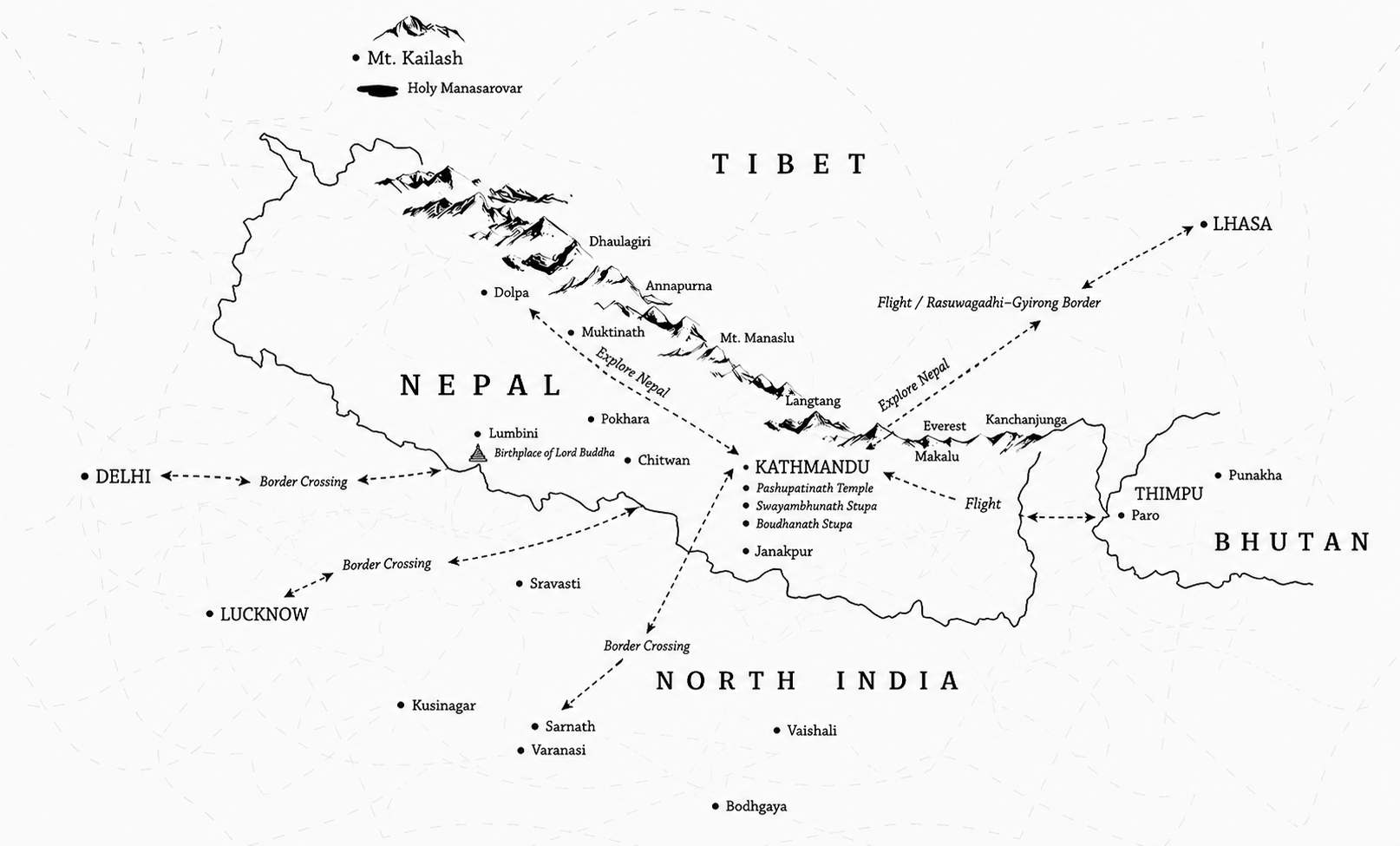
Nepal serves as an important gateway between the Himalayas and the Indian subcontinent. It shares a northern border with the Tibet Autonomous Region of China and an open southern border with India, while Bhutan is connected primarily by air via Kathmandu. Nepal also offers the only scheduled international air connection to Lhasa outside mainland China, alongside overland access through the Rasuwagadhi–Gyirong border crossing.
Region | Connectivity from Nepal |
Tibet (China) | Direct flights between Kathmandu and Lhasa (subject to airline schedules) and overland travel via the Rasuwagadhi–Gyirong border crossing. |
Bhutan | Regular direct flights connect Kathmandu with Paro, making air travel the primary link between the two countries. Nepal and Bhutan do not share a land border. |
North India | Easy access by air to cities such as Delhi, Varanasi, and Lucknow, and by road through major border crossings including Birgunj–Raxaul, Belahiya–Sunauli, Kakarbhitta–Panitanki, and Nepalgunj–Rupaidiha. |
Restricted Areas in Nepal
Restricted Area | District/Region | Permit Required | Min. Group Size | Guide Required |
Upper Mustang | Mustang | RAP | 2 | Yes |
Upper & Lower Dolpa | Dolpa | RAP | 2 | Yes |
Manaslu | Gorkha | RAP | 2 | Yes |
Tsum Valley | Gorkha | RAP | 2 | Yes |
Nar-Phu Valley | Manang | RAP | 2 | Yes |
Humla (Limi / Simikot Region) | Humla | RAP | 2 | Yes |
Kanchenjunga Area | Taplejung | RAP | 2 | Yes |
Note: Independent trekking is not permitted in these zones. Access is only allowed through a registered Nepal based trekking agency with a licensed guide, and the Restricted Area Permit must be arranged through them from the Department of Immigration in Kathmandu.
Unexplored Nepal: Where Few Tourists Go
Beyond Nepal's famous trekking routes lie remote valleys, sacred lakes, and culturally rich villages that remain far less visited, offering authentic landscapes and traditional lifestyles away from major tourist flows.
Destination | Region | Why It’s Lesser-Known |
Rara Lake | Mugu | Remote high-altitude lake in western Nepal, accessible but still off major tourist circuits |
Khaptad National Park | Far West | Protected wilderness area with limited tourism infrastructure |
Panch Pokhari | Sindhupalchok | Sacred alpine lakes with moderate trekking traffic but still relatively quiet |
Sinja Valley | Jumla | Historic birthplace of the Nepali language, highly remote and underdeveloped tourism |
Ruby Valley | Dhading | Scenic trekking route between Langtang and Manaslu regions, still emerging |
Api Nampa Conservation Area | Darchula | One of Nepal’s most remote Himalayan regions with limited access |
Note: Many of these areas offer basic infrastructure, making them ideal for travellers seeking authentic, uncrowded experiences.
Practicality of Touring Nepal with Tibet, Bhutan, and North India
Kathmandu serves as the gateway to the Himalayas, making it an ideal starting point for multi-country journeys across Nepal, Tibet, Bhutan, and North India. With international flight connections, convenient overland access to India, and direct flights between Kathmandu and Lhasa (subject to airline schedules), travellers can easily combine diverse landscapes, cultures, and spiritual heritage into a single itinerary.
Each destination has its own entry requirements. Tibet requires a Tibet Travel Permit and travel through a licensed tour operator, while Bhutan requires most international visitors to book through a licensed tour operator. Nepal offers visa-on-arrival facilities for many eligible nationalities, and India provides e-Visas or regular visas depending on nationality. Thamel Travels and Tours specializes in customized multi-country itineraries, helping travellers seamlessly explore Nepal, Tibet, Bhutan, and North India with coordinated permits, transportation, accommodation, and experienced local guides.