Region Snapshot
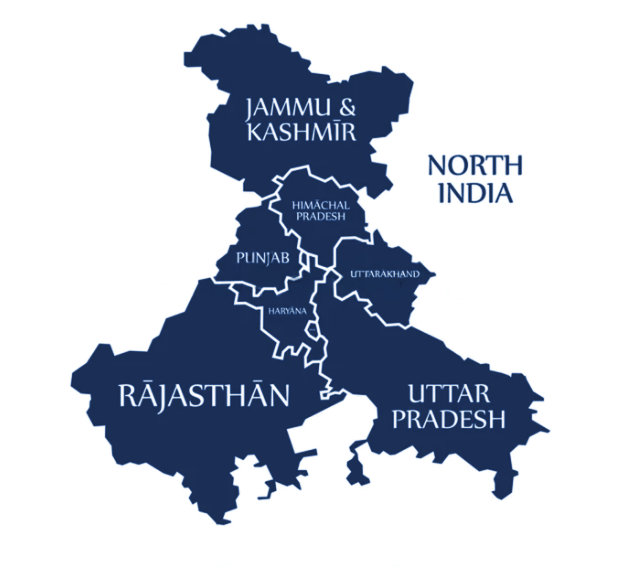
North India is a vast and diverse region stretching from the high Himalayas and cold Ladakhi plateau through the fertile Indo-Gangetic Plains to the Thar Desert, housing a population that exceeds 500 million people. This culturally rich area serves as a vibrant melting pot for Indo-Aryan, Tibetan-influenced, and desert communities, where daily life moves to the rhythm of multi-faith festivals and pilgrimages, cementing the region as a global capital for spiritual, heritage, and yoga tourism. As the country's primary tourism engine room, it heavily drives inbound and domestic revenue through iconic landmarks like the Taj Mahal, the Golden Triangle, and major Himalayan hill stations. While the region is broadly welcoming with a mature, well-connected rail and road network, certain border zones and sensitive areas require special permits or adherence to local travel advisories. Politically, the region is integrated into India's framework as a federal parliamentary democratic republic, the world's largest democracy, governed under a 1950 constitution with Prime Minister Narendra Modi serving as the chief executive heading the government.
History of Tourism in India
India has drawn pilgrims, traders, and scholars along its sacred and trade routes for over two millennia, long before "tourism" existed as a modern concept, with Buddhist pilgrimage circuits and Hindu sacred geography shaping travel patterns since antiquity. Organized modern tourism accelerated after 1947 independence and especially from the 1990s economic liberalization onward as aviation expansion, heritage conservation, and global "Incredible India" branding turned the country into a mainstream international destination.
Regional Connectivity
North India functions as South Asia's principal overland and aviation gateway; it borders and connects to Nepal, Bhutan (via transit), Tibet/China, Pakistan, and Bangladesh through a dense network of highways, rail lines, and international airports. Delhi's Indira Gandhi International Airport is the region's dominant hub, with secondary gateways at Amritsar, Lucknow, Dehradun, Jaipur, Varanasi, and Leh (for high-Himalayan access) extending reach into the mountains and plains alike.
Areas of Total Tourist Activity
North India supports nearly every tourism category that exists:
Category | Examples |
Cultural & Heritage | Delhi, Agra, Jaipur, Fatehpur Sikri |
Religious & Spiritual | Varanasi, Haridwar, Amritsar, Vaishno Devi |
Buddhist Circuit | Ladakh monasteries, Kushinagar, Sarnath |
Adventure & Mountaineering | Ladakh, Himachal, Uttarakhand Himalaya |
Wildlife & Safari | Jim Corbett, Ranthambore |
Desert Tourism | Jaisalmer, Bikaner, Thar Desert |
Wellness, Yoga & Ayurveda | Rishikesh, Uttarakhand, ashrams |
River Rafting | Rishikesh (Ganges), Ladakh (Zanskar) |
Ski Tourism | Gulmarg, Auli |
Motorcycle Expeditions | Manali–Leh Highway, Srinagar–Leh Highway |
Luxury Rail Tourism | Palace on Wheels, Maharajas' Express |
Festival Tourism | Pushkar Camel Fair, Kumbh Mela, Holi in Mathura |
Village & Rural Tourism | Rural Rajasthan, Kumaon hill villages |
Culinary Tourism | Delhi street food, Punjabi & Awadhi cuisine trails |
Easily Accessible Areas for Touring
Delhi, Agra, Jaipur, Amritsar, Varanasi, Rishikesh, Haridwar, Shimla, Manali, Udaipur, Jodhpur, and Nainital all have well-developed airports or fast rail links, paved highways, and dense tourist infrastructure, making them straightforward to combine into multi-city itineraries without specialized permits or high-altitude logistics.
North India Distance & Travel Time Reference (from Delhi)
Destination | Distance from Delhi | Road Time | Rail Time | Flight Time |
Agra | ~230 km | ~4 hr | ~1.5–2 hr (Gatimaan/Vande Bharat Express) | N/A (short-hop only) |
Jaipur | ~280 km | ~5 hr | ~4.5 hr | ~1 hr |
Amritsar | ~450 km | ~8–9 hr | ~6 hr | ~1.2 hr |
Varanasi | ~820 km | ~14–16 hr | ~8–12 hr | ~1.3 hr |
Rishikesh/Haridwar | ~230 km | ~5–6 hr | ~4.5–5 hr | ~45 min (to Dehradun) + road |
Shimla | ~340 km | ~7–8 hr | ~7–8 hr (toy train from Kalka) | ~1 hr (to Shimla Airport, limited) |
Manali | ~540 km | ~12–14 hr | Via Chandigarh + road | ~1 hr (to Bhuntar/Kullu) + road |
Leh (Ladakh) | ~1,010 km (air route) | Not advisable overland in one stretch | No rail | ~1.5 hr direct flight |
Udaipur | ~660 km | ~11–12 hr | ~12 hr | ~1.3 hr |
Jodhpur | ~600 km | ~10–11 hr | ~10–11 hr | ~1.2 hr |
Jaisalmer | ~830 km | ~13–14 hr | ~15–17 hr (overnight) | Seasonal flights only |
Geographical Areas of Adventure Tourism
Western Himalayas – Ladakh, Himachal Pradesh, Jammu & Kashmir: high-altitude trekking, mountaineering, ice climbing, white-water rafting (Zanskar, Beas rivers), mountain biking, jeep expeditions, camel safari in Nubra Valley
Central Himalayas – Uttarakhand: Himalayan trekking (Valley of Flowers, Kedarnath treks), peak climbing, river rafting on the Ganges, skiing at Auli, wildlife safaris in Jim Corbett, yoga and wellness retreats in Rishikesh
Desert Adventure – Rajasthan: camel safari, desert camping in Jaisalmer/Sam Dunes, hot-air ballooning over Jaipur, jeep safaris, heritage walking tours in walled cities
Popular Tourist Destinations
Delhi · Agra (Taj Mahal) · Jaipur · Varanasi · Rishikesh · Haridwar · Amritsar (Golden Temple) · Shimla · Manali · Leh · Udaipur · Jodhpur · Jaisalmer · Jim Corbett National Park · Ranthambore National Park
Popular Tourist Routes
Route Name | Path | Typical Duration | Theme |
Golden Triangle | Delhi → Agra → Jaipur | 4–6 days | Heritage & Mughal architecture |
Himalayan Circuit | Delhi → Shimla → Manali → Leh | 12–16 days | Mountains & road trip adventure |
Spiritual Circuit | Haridwar → Rishikesh → Kedarnath → Badrinath | 8–10 days | Char Dham pilgrimage |
Buddhist Circuit | Varanasi → Sarnath → Kushinagar → Bodh Gaya (extends into East India) | 6–8 days | Buddhist heritage |
Rajasthan Heritage Circuit | Jaipur → Jodhpur → Udaipur → Jaisalmer | 10–12 days | Royal palaces & desert culture |
Kashmir Circuit | Srinagar → Gulmarg → Pahalgam → Sonamarg | 6–8 days | Alpine valleys, houseboats |
Top Spiritual Destinations
Varanasi – India's holiest city on the Ganges, center of Hindu ritual life
Haridwar – gateway to the Char Dham, site of the Kumbh Mela
Rishikesh – "Yoga Capital of the World," Ganga aarti ceremonies
Kedarnath & Badrinath Temples – two of the four Char Dham pilgrimage sites, high in the Garhwal Himalaya
Vaishno Devi – one of India's most visited Hindu pilgrimage shrines, Jammu region
Golden Temple (Amritsar) – Sikhism's holiest shrine
Hemkund Sahib – high-altitude Sikh pilgrimage site in Uttarakhand
Yamunotri & Gangotri – source shrines of the Yamuna and Ganges rivers, part of the Char Dham
Government Focus on Wellness Tourism (Toward 2027)
India's wellness tourism push has accelerated sharply, anchored by the flagship "Heal in India" initiative and a dedicated allocation of roughly USD 2.2 billion (₹20,000 crore) in the Union Budget 2025–26 to formalize Ayurveda, yoga, and naturopathy as exportable wellness services. The Union Budget 2026–27 builds on this with plans for five regional medical & wellness hubs combining AYUSH centers, diagnostics, and rehabilitation facilities; three new All India Institutes of Ayurveda; an upgraded WHO Global Traditional Medicine Centre in Jamnagar; and a pilot program to upskill 10,000 tourist guides across 20 iconic sites. A dedicated e-AYUSH visa stream now formalizes entry for wellness-seeking travelers, with roughly 230,000 such entries recorded in the first half of 2025 alone. North India's Himalayan belt, particularly Rishikesh and Uttarakhand, is one of the most prominent beneficiaries of this push, alongside Rajasthan's heritage-wellness resort circuit. India's overall wellness tourism market is projected to grow from roughly USD 31 billion in 2026 to USD 44 billion by 2031.
Overall Government Tourism Policies
India's national tourism strategy (implemented federally, with North Indian states as major beneficiaries) emphasizes:
Sustainable and eco-tourism development, including eco-friendly trail upgrades
Heritage conservation 15+ archaeological/historical sites earmarked for visitor-experience upgrades (guided pathways, interpretive displays)
Medical and wellness tourism expansion via "Heal in India" and dedicated visa categories (e-Medical Visa, e-Medical Attendant Visa, AYUSH Visa)
Guide training and hospitality skilling large-scale guide upskilling programs
Digital tourism services streamlined e-visa systems, digital MVT (Medical Value Travel) portals, airport MVT concierge lounges
Improved air and rail connectivity, including regional airport expansion (UDAN scheme) to improve access to hill and heritage towns
Religious and pilgrimage tourism promotion, including Char Dham infrastructure upgrades
Rural and community-based tourism to spread economic benefit beyond major metros
Public–private partnerships for hotel and infrastructure investment
International marketing under the "Incredible India" brand umbrella, with Medical Value Travel now promoted as a formal sub-brand
India Visa Cost Reference (2026, most nationalities)
Visa Type | Validity | Government Fee (USD) | Notes |
e-Tourist Visa (30 days) | 30 days | $25 (Jul–Mar) / $10 (Apr–Jun promo) | Double entry |
e-Tourist Visa (1 year) | 365 days | $40 | Multiple entry, max 180 days/visit |
e-Tourist Visa (5 years) | 5 years | $80 | Multiple entry |
e-Medical Visa | 60 days | ~$80–175 | Triple entry |
e-Business Visa | 365 days | ~$80 | Multiple entry |
Regular (paper) Tourist Visa | Varies | $150–320 | Processed via Indian Mission, 2–3 weeks |
Urgent e-Visa processing (add-on) | — | +$99 | Optional expedited service |
Note: a ~2.5–3% payment processing surcharge typically applies on top of the listed government fee.
Nepal's Connectivity with North India
Nepal shares an extensive open land border with India, with major crossings at Sunauli, Raxaul–Birgunj, Jogbani–Biratnagar, and Banbasa–Mahendranagar, alongside frequent flights connecting Kathmandu to Delhi, Varanasi, and Kolkata. This is by far Nepal's most flexible and heavily used regional connection.
Nepal Regional Connectivity Table
Route | Distance | Travel Time | Transport Options | Tourism Potential |
Kathmandu ↔ Delhi | ~1,150 km | ~1 hr 45 min (flight) | Flight, bus, private vehicle | Excellent |
Kathmandu ↔ Varanasi | ~420 km | ~1 hr (flight) / 8–10 hr (road) | Flight, road | Excellent |
Kathmandu ↔ Mount Kailash | ~900 km | 12–15 day overland tour | Organized expedition only | Seasonal |
Kathmandu ↔ Leh (Ladakh) | ~950 km (air route) | Via Delhi connection | Flight | Good |
Practicality of Touring Nepal & North India Together
Nepal and North India form one of the most practical and long-established combined-travel routes in the region. Unlike some neighboring destinations, this pairing requires very little advance logistical planning.
Ease of movement: Frequent flight connections and multiple open land border crossings (such as Sunauli/Belahiya, Raxaul/Birgunj, and Nepalgunj/Jamunaha) mean travelers aren't locked into rigid routing. With standard tourist visas in hand, a visa-on-arrival for Nepal, and an e-visa for India, it's entirely possible to shift plans on the fly, add or drop a stop, or change travel dates without the trip unraveling.
Minimal advance booking: Beyond arranging standard visas and booking accommodation/transport as you would for any trip, there's no special permit, licensed-operator requirement, or government quota system to navigate. This is what makes the route accessible even to travelers who prefer a loosely planned or semi-spontaneous itinerary.
Recommended trip length: A well-paced Nepal–North India combination typically runs 10–18 days, enough to cover highlights like Kathmandu, Pokhara, and Chitwan in Nepal alongside Delhi, Agra, and Varanasi (or Rajasthan) in India though this can flex shorter or longer depending on interests.
Best season: October–November and March–April are ideal, offering clear mountain views in Nepal and comfortable temperatures across North India while avoiding the monsoon (June–September) and the coldest Himalayan winter months (December–February).
Optional extensions: Travelers with more time can extend this core itinerary to include Bhutan or Tibet, but both require significantly more advance planning. Bhutan needs a licensed-operator booking and SDF payment, while Tibet requires a Chinese group visa and travel permit arranged days in advance so these are best treated as deliberate add-ons rather than spontaneous extensions to the Nepal–India route.
Estimated Cost & Duration for Tours
Itinerary | Duration | Estimated Cost (USD, per person) | Ideal For |
Nepal + North India | 10–14 days | $1,200–2,500 | First-time visitors |
Why Nepal Functions as the Regional Hub
Advantage | Detail |
Geographic position | Centrally located between North India, Tibet, and Bhutan |
International access | Tribhuvan International Airport connects widely across South Asia and beyond |
Border access | Multiple open land crossings with India; road access toward Tibet via Kerung |
Tourism diversity | Combines trekking, wildlife, culture, spirituality, and wellness in one country |
Combination ease | Straightforward to pair with India's Golden Triangle, Bhutan's monasteries, or Tibet's sacred sites |
Bottom line: North India pairs easily and inexpensively with Nepal on its own no special permits, no advance-booked operators, just standard visas and open borders. Bhutan and Tibet are both entirely feasible additions to this core route, but neither is "open" in the same sense: each runs on its own advance-booked visa or permit track that has to be arranged separately and ahead of time. The practical implication is sequencing, not spontaneity. A well-planned Himalayan grand tour treats Nepal as the fixed hub, then builds the India, Bhutan, and Tibet legs around it deliberately rather than assuming all four destinations can be moved between as fluidly as if they shared the same open-border ease.