Overview
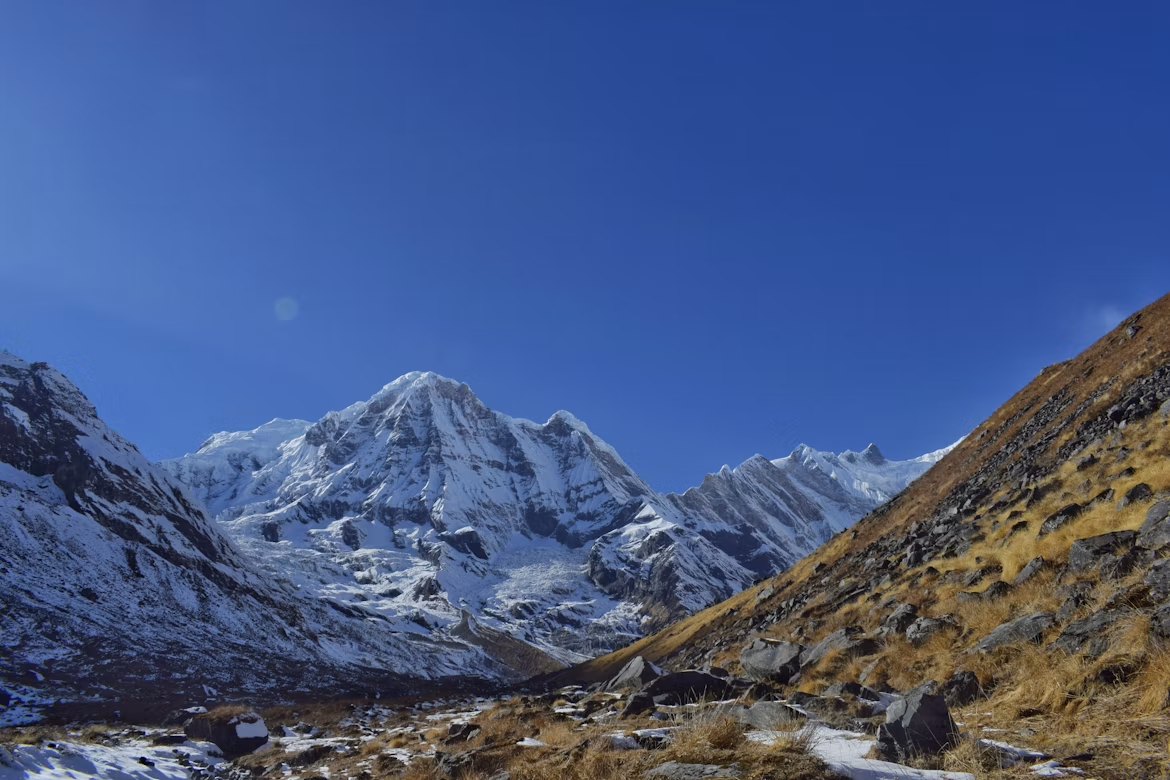
The Annapurna region, located in west-central Nepal within the Gandaki Province, is one of the most diverse and accessible trekking destinations in the world. Centered around the Annapurna massif, home to Annapurna I (8,091 metres), the tenth-highest peak on Earth, the region spans dramatic altitude ranges, from subtropical foothills near Pokhara to high alpine passes above 5,000 metres. It falls largely within the Annapurna Conservation Area, Nepal's largest protected area, covering approximately 7,629 square kilometres and home to over 100,000 residents from Gurung, Thakali, Manangi, and Magar communities.
Trekking in the Annapurna region combines spectacular Himalayan scenery with rich cultural exposure, passing through terraced farmland, rhododendron forests, and traditional mountain villages. Its well-developed network of teahouses and trails makes it suitable for a wide range of trekkers, from first-time hikers to experienced mountaineers.
What sets Annapurna apart from other Himalayan destinations is the sheer variety compressed into a single region. A trekker can begin the day walking through subtropical forest alive with birdsong, climb through pine and rhododendron woodland by midday, and arrive by evening at a stone-walled village overlooking snow peaks. Few trekking regions in the world offer this range of landscape, altitude, and culture within such manageable distances, which is part of why Annapurna continues to attract both first-time trekkers seeking an accessible Himalayan experience and seasoned mountain travellers looking for longer, more demanding routes.
History of Trekking in Annapurna
Organized trekking in the Annapurna region began in the 1960s, shortly after Nepal opened to international visitors. Annapurna I holds a significant place in mountaineering history as the first 8,000-metre peak ever summited, climbed by Maurice Herzog and Louis Lachenal of the French expedition in 1950, three years before Everest's first ascent. Following this milestone, the region gradually developed into a major trekking destination, and the establishment of the Annapurna Conservation Area Project (ACAP) in 1986 helped balance tourism growth with environmental and community-based conservation. Today, the region receives a significant share of Nepal's total trekking visitors each year, second only to the Everest region.
Much of the region's continued appeal lies in how conservation and tourism have developed alongside one another. Unlike many protected areas managed solely by government authorities, ACAP introduced a community-based model that gave local villages a direct role in managing natural resources and tourism revenue. This approach helped fund schools, health posts, and drinking water projects in trekking villages, while also encouraging sustainable building practices and forest management. As a result, the Annapurna region is often cited as one of the more successful examples of community-led conservation tourism in the Himalaya, and the model has since been referenced in the planning of other protected areas across Nepal.
Regional Connectivity
The Annapurna region is primarily accessed through Pokhara, Nepal's second-largest city and the country's leading gateway for adventure tourism. Pokhara is connected to Kathmandu by domestic flights of approximately 25 to 30 minutes or a scenic 6 to 8 hour drive. Pokhara International Airport, opened in 2023, has also begun handling limited international flights, gradually improving direct access to the region. From Pokhara, trailheads such as Nayapul, Besisahar, and Jomsom are reached by local drive, jeep, or short domestic flight, depending on the specific route.
Road access into the region has steadily improved over the past decade, with jeep tracks now reaching villages that were once several days' walk from the nearest motorable road. While this has shortened some itineraries, most trekking routes retain long, uninterrupted walking sections through forest and farmland, and many trekkers choose to begin walking from lower trailheads such as Nayapul or Syange even where a shorter jeep option exists, in order to experience the fuller range of the trail. Local buses, shared jeeps, and private vehicle hire are all available from Pokhara, and we include private transport to and from the starting and ending points of the trek in all our itineraries.
Major Trekking Routes in the Annapurna Region
Trek | Duration | Max Altitude | Best Known For | Difficulty |
7–12 days | 4,130 m (Annapurna Base Camp) | Close-up views of the Annapurna Sanctuary and surrounding peaks | Moderate | |
Annapurna Circuit Trek | 12–18 days | 5,416 m (Thorong La Pass) | Diverse landscapes, Tibetan-influenced culture, high pass crossing | Moderate–Challenging |
4–6 days | 3,210 m (Poon Hill) | Sunrise views over the Annapurna and Dhaulagiri ranges | Easy–Moderate | |
Mardi Himal Trek | 5–8 days | 4,500 m (Mardi Himal Base Camp) | Off-the-beaten-path trail with dramatic close-range mountain views | Moderate |
15–19 days | 5,416 m (Thorong La Pass) | Includes Tilicho Lake, one of the world's highest lakes | Challenging | |
10–14 days | 3,840 m (Lo Manthang) | Tibetan Buddhist culture, desert landscapes, restricted area | Moderate | |
Annapurna Base Camp Trek via Poon Hill | 11–13 days | 4,130 m (Annapurna Base Camp) | Combines the Poon Hill sunrise viewpoint with the full ABC trail | Moderate |
Kopra Ridge Trek via Poon Hill | 12–13 days | 3,660 m (Kopra Ridge) | Off-the-beaten-path ridge walk with community lodges and Poon Hill finale | Moderate |
Experience Annapurna – Ker & Downey Lodge Trek | 3–4 days | Approx. 2,000 m (Dhampus area) | Short, comfortable foothill trek with premium lodge accommodation | Easy |
Each of these routes offers a distinct character, and the right choice depends largely on the time available, desired altitude, and level of physical challenge sought. The Ghorepani Poon Hill Trek and Mardi Himal Trek are well suited to travellers with limited time or moderate fitness, offering excellent mountain views without extended high-altitude exposure. The Annapurna Base Camp Trek strikes a balance between accessibility and immersion, bringing trekkers into the heart of the Annapurna Sanctuary within a week to ten days. The Annapurna Circuit, particularly when combined with Tilicho Lake, remains the region's classic long-distance trek, crossing Thorong La Pass and traversing dramatically different landscapes from lush mid-hills to the arid, high-desert terrain of the Manang and Mustang valleys. Upper Mustang, meanwhile, appeals to travellers primarily interested in Tibetan Buddhist culture and stark desert scenery rather than high mountain passes.
For trekkers wanting to combine the Annapurna Base Camp experience with the celebrated Poon Hill sunrise, the Annapurna Base Camp Trek via Poon Hill links both highlights into a single extended itinerary. The Kopra Ridge Trek via Poon Hill offers a quieter alternative, following community-managed trails away from the main Ghorepani–Ghandruk route before rejoining it for the Poon Hill finale. For travellers with limited time or seeking a more comfortable introduction to the region, the Experience Annapurna – Ker & Downey Lodge Trek provides a short foothill trek with premium lodge accommodation near Dhampus, suited to those wanting Himalayan views without a multi-day commitment.
Key Destinations Within the Annapurna Region
Destination | Highlights | Typically Reached Via |
Pokhara | Phewa Lake, gateway to all Annapurna treks, adventure sports | Flight or drive from Kathmandu |
Ghandruk | Traditional Gurung village, Annapurna and Machhapuchhre views | Trek or short drive from Pokhara |
Poon Hill | Panoramic sunrise views over the Annapurna range | Trek from Ghorepani |
Annapurna Base Camp | Amphitheatre of peaks including Annapurna I and Machhapuchhre | Multi-day trek from Nayapul |
Manang | Acclimatization village, Tibetan-influenced culture | Multi-day trek or jeep from Besisahar |
Muktinath | Sacred Hindu and Buddhist pilgrimage site | Trek over Thorong La or flight/drive via Jomsom |
Jomsom | Windy valley town, gateway to Upper Mustang | Domestic flight or drive from Pokhara |
Tilicho Lake | One of the world's highest lakes at 4,919 metres | Side trek from Manang or Shree Kharka |
Beyond the well-known landmarks, the Annapurna region is distinguished by the everyday life visible along its trails. Villages such as Ghandruk and Chhomrong are home to stone houses with slate roofs, prayer flags strung between courtyards, and terraced fields worked much as they have been for generations. Further north, in areas such as Manang and Mustang, the architecture, dress, and religious practice shift visibly toward Tibetan Buddhist tradition, reflecting the region's historical trade links across the Himalaya. Monasteries, chortens, and mani walls are common sights on the upper stretches of the Annapurna Circuit and Upper Mustang routes, and many trekkers consider this cultural transition, alongside the mountain scenery, one of the most memorable aspects of the journey.
Best Seasons for Annapurna Trekking
Season | Months | Conditions |
Spring | March – May | Warm days, clear mountain views, rhododendron forests in bloom |
Autumn | September – November | Stable weather, the clearest skies, and peak trekking season |
Winter | December – February | Cold at higher elevations, quieter trails, suitable for lower-altitude routes |
Monsoon | June – August | Wet and humid, best avoided for high-altitude routes, though Upper Mustang remains accessible due to its rain-shadow location |
Seasonal conditions vary considerably across the region's altitude range, and this should be factored into route planning as much as the calendar month itself. Lower-altitude routes such as Ghorepani Poon Hill remain walkable through much of the winter, when higher passes like Thorong La may be closed or difficult due to snowfall. Conversely, Upper Mustang's position in the rain shadow of the Annapurna and Dhaulagiri ranges makes it one of the few areas in Nepal that can be trekked comfortably during the monsoon months, when most other regions are affected by heavy rainfall, leeches, and obscured mountain views. If you're planning a specific route, we always recommend confirming current trail and pass conditions with us shortly before departure, particularly for high-altitude crossings.
Permits Required for Annapurna Trekking
Permit | Required For | Issued By |
Annapurna Conservation Area Permit (ACAP) | All treks within the Annapurna Conservation Area | Nepal Tourism Board / ACAP counters |
Restricted Area Permit (RAP) | Upper Mustang, Nar-Phu Valley | Department of Immigration, via a licensed trekking agency |
Restricted Areas Within the Annapurna Region
Restricted Area | District/Region | Permit Required | Min. Group Size | Guide Required |
Upper Mustang | Mustang | RAP | 2 | Yes |
Nar-Phu Valley | Manang | RAP | 2 | Yes |
Note: A registered guide is mandatory for restricted areas such as Upper Mustang and Nar-Phu Valley, and independent trekking is not permitted in these zones. We arrange the Restricted Area Permit on your behalf through the Department of Immigration in Kathmandu.
Permit fees are generally modest in comparison to the overall cost of a trek and go toward conservation efforts, trail maintenance, and local infrastructure within the region. The ACAP permit can be obtained in Kathmandu or Pokhara, and we handle all the required paperwork and passport-sized photographs on your behalf as part of every trek we arrange. We recommend carrying several photocopies of your passport and permits while on the trail, as checkpoints are located at multiple points along the major routes.
Unexplored Corners of the Annapurna Region
Beyond the well-trodden trails to Annapurna Base Camp and Poon Hill lie quieter valleys and villages that see only a fraction of the region's trekking traffic, offering a more remote and authentic experience of the Annapurna Himalaya.
Destination | Region | Why It's Lesser-Known |
Nar-Phu Valley | Manang | Restricted, sparsely populated valley with Tibetan-style villages |
Khopra Ridge | Myagdi | Alternative to Poon Hill with fewer crowds and equally striking views |
Mohare Danda | Kaski/Myagdi | Community-run lodges and panoramic ridgeline views, largely undiscovered |
Sikles | Kaski | Traditional Gurung village on a quieter approach to the Annapurna range |
Note: Many of these areas have basic teahouse infrastructure, making them well suited to travellers seeking a quieter alternative to the region's main circuits.
Difficulty Levels and Trek Grading
Annapurna treks are generally graded across four levels, and choosing a route that matches one's fitness and prior trekking experience is essential to a safe and enjoyable trip.
Grade | Typical Routes | Daily Walking | Suitable For |
Easy | Ker & Downey Lodge Trek, lower Ghorepani sections | 3–5 hours | First-time trekkers, families, limited time |
Moderate | Ghorepani Poon Hill, Mardi Himal, Annapurna Base Camp | 5–7 hours | Reasonably fit trekkers with some hiking background |
Moderate–Challenging | Annapurna Circuit, Kopra Ridge via Poon Hill | 6–8 hours | Trekkers comfortable with multi-day high-altitude walking |
Challenging | Annapurna Circuit with Tilicho Lake, Nar-Phu Valley | 6–9 hours, some long pass-crossing days | Experienced trekkers seeking remote or high-altitude routes |
Physical Fitness and Trek Preparation
While technical climbing skills are not required for any of the standard Annapurna routes, a reasonable level of cardiovascular fitness makes for a far more enjoyable trek. We recommend building up to walking 4 to 5 hours comfortably on varied terrain in the weeks before departure, along with some stair or hill training to prepare the legs for sustained ascents and descents. If you have pre-existing heart, lung, or joint conditions, we advise consulting a doctor before undertaking any high-altitude route, particularly those crossing Thorong La Pass or venturing to Tilicho Lake.
Altitude Sickness and Acclimatization
Altitude sickness, or Acute Mountain Sickness (AMS), is a genuine consideration on routes that climb above 3,500 metres, including the Annapurna Base Camp, Annapurna Circuit, and Mardi Himal treks. Itineraries on these routes typically build in dedicated acclimatization days, most notably at Manang on the Annapurna Circuit, to allow the body time to adjust to reduced oxygen levels. Common symptoms include headache, nausea, and fatigue, and the standard guidance is to ascend gradually, stay well hydrated, and descend immediately if symptoms worsen. Guides on organized treks are trained to recognize the signs of AMS and to make the call to descend when necessary.
Teahouse Accommodation on the Trail
The Annapurna region is served by an extensive network of teahouses, which range from simple stone lodges in higher villages to more comfortable guesthouses with attached bathrooms in lower, more accessible areas such as Ghandruk and Ghorepani. Rooms are typically twin-share with basic bedding, and hot showers, Wi-Fi, and device charging are usually available for a small additional fee, particularly at higher elevations where these amenities rely on solar power or generators. On more premium routes, such as the Ker & Downey Lodge Trek, accommodation is upgraded to include lodges with private facilities and a higher standard of comfort.
Food and Drinking Water
Teahouse menus across the Annapurna region are fairly consistent and typically include dal bhat (the Nepali staple of rice, lentils, and vegetables), noodle and pasta dishes, soups, and simple breakfast items such as porridge, eggs, and pancakes. Dal bhat is often recommended for trekkers due to its unlimited refill policy in most teahouses, making it a practical, high-energy option for long walking days. Bottled water is widely available but adds to plastic waste in the mountains, so many trekkers instead carry a reusable bottle and use water purification tablets or a filter, or purchase boiled water from teahouses.
What to Pack for Annapurna Trekking
Packing requirements vary depending on the season and maximum altitude of the chosen route, but most trekkers carry a broadly similar core kit.
Category | Key Items |
Clothing | Layered thermal wear, fleece or down jacket, waterproof shell, trekking trousers |
Footwear | Broken-in trekking boots, wool socks, camp shoes for evenings |
Gear | Sleeping bag (rated to at least -10°C for high routes), trekking poles, headlamp |
Health | Personal first-aid kit, altitude medication if prescribed, water purification |
Documents | Passport copies, permit copies, travel insurance details |
We also arrange rental gear such as sleeping bags and down jackets in Kathmandu or Pokhara for travellers who prefer not to carry or purchase specialized equipment.
Guides and Porters
Hiring a licensed guide is now effectively required for most independent trekking routes in Nepal following recent regulatory changes, and is already mandatory for restricted areas such as Upper Mustang and Nar-Phu Valley. Guides assist with navigation, permit checks, accommodation arrangements, and cultural interpretation, while porters carry the bulk of the trekking gear, typically for two trekkers per porter, allowing guests to walk with only a light daypack. Both roles are typically arranged as part of a trekking package and are drawn from local communities within the region.
Group Treks vs. Independent Trekking
Trekkers can choose between joining a small group departure, booking a private guided trek, or, on select unrestricted routes, trekking independently with a hired guide and porter. Group treks offer a fixed itinerary, shared costs, and the social element of travelling with other trekkers, while private treks allow for a fully customized schedule and pace. Independent trekking without a guide is increasingly restricted on national park and conservation area routes, and is not permitted at all in restricted areas such as Upper Mustang.
Trekking Costs and Budget Planning
Costs for Annapurna treks vary considerably depending on route, duration, group size, and level of comfort. Shorter, easier treks such as Ghorepani Poon Hill or the Ker & Downey Lodge Trek generally fall at the lower end of the budget range, while longer routes such as the Annapurna Circuit with Tilicho Lake, or treks requiring restricted area permits such as Upper Mustang, sit at the higher end due to permit costs, longer guide and porter engagement, and additional logistics. A typical Annapurna trek, inclusive of permits, guide, porter, teahouse accommodation, and meals, ranges from approximately USD 700 to USD 2,000 per person, depending on these factors.
Visa and Entry Requirements for Nepal
Most nationalities can obtain a Nepal tourist visa on arrival at Tribhuvan International Airport in Kathmandu or at land border crossings, valid for 15, 30, or 90 days depending on the fee paid.You can apply for it online as well, which will save your time at the airport. Payment can be made in cash (USD) or by card at the airport kiosks, and applicants should bring a passport-sized photo, though photo booths are also available on-site. We're happy to confirm current visa fees and any nationality-specific restrictions with you before you travel.
Currency, Money and ATMs on the Trail
Nepal's currency is the Nepali Rupee (NPR), and while ATMs and currency exchange counters are widely available in Kathmandu and Pokhara, cash machines become scarce beyond the last major towns on most treks, such as Besisahar or Nayapul. Trekkers are strongly advised to carry sufficient Nepali Rupees in cash before starting the trail, as teahouses, snacks, hot showers, and charging fees along the route are almost always cash-only.
Communication: Mobile Networks and Wi-Fi
Nepal's major mobile networks, NTC and Ncell, provide reasonable coverage across most of the Annapurna region's main trekking routes, including data service in larger villages such as Ghandruk, Manang, and Jomsom. A local SIM card, easily purchased in Kathmandu or Pokhara, is a practical option for trekkers wanting affordable connectivity. Wi-Fi is available in most teahouses for a small fee, though speed and reliability decrease with altitude and remoteness.
Vaccinations and Health Precautions
While no vaccinations are strictly mandatory for entry into Nepal, routine vaccinations along with Hepatitis A, Typhoid, and Tetanus are commonly recommended by travel health authorities for trekkers. Travellers with specific health conditions, or those considering high-altitude routes such as the Annapurna Circuit or Tilicho Lake, should consult a travel health clinic several weeks before departure, and may wish to discuss altitude sickness medication such as Acetazolamide with their doctor.
Tipping Guide for Guides and Porters
Tipping is a customary and expected part of trekking in Nepal, and typically represents a meaningful part of guides' and porters' income. A general guideline is USD 8 to 12 per day for a guide and USD 5 to 8 per day for a porter, though this can vary by trip length, group size, and service quality. On group treks, tips are usually pooled and presented collectively at the end of the trip, often during a small farewell gathering.
Cultural Etiquette and Local Customs
Trekkers passing through Annapurna's villages are encouraged to dress modestly, particularly near temples and monasteries, and to ask before photographing local people. It is customary to pass mani walls, chortens, and prayer wheels on the left-hand side, in keeping with Buddhist tradition, and to remove shoes before entering temples or monastery halls. A simple "Namaste" with palms together is a warmly received greeting throughout the region, regardless of the specific ethnic community.
Basic Nepali Phrases for the Trail
While English is widely understood by guides and in most teahouses, a few basic Nepali phrases are appreciated by local communities and can enrich the trekking experience.
Phrase | Meaning |
Namaste | Hello / greetings |
Dhanyabad | Thank you |
Kati ho? | How much is it? |
Ramro cha | It's good / nice |
Bistari | Slowly (useful on the trail) |
Flora and Fauna of the Annapurna Region
The dramatic altitude range of the Annapurna Conservation Area supports an equally dramatic range of plant and animal life, from subtropical forest at lower elevations to alpine scrub and bare rock near the high passes. Rhododendron forests, Nepal's national flower, are a particular highlight of the spring trekking season, especially along the Ghorepani-Poon Hill and Mardi Himal routes. The conservation area is also home to over 100 species of mammals, including the elusive snow leopard and Himalayan tahr, along with more than 400 recorded bird species, making it a destination of interest for birdwatchers as well as trekkers.
Local Communities and Culture
The Annapurna region is home to a rich mix of ethnic communities, each with distinct traditions, architecture, and livelihoods shaped by altitude and geography. Gurung communities are prominent in the lower and mid-hill villages such as Ghandruk and Chhomrong, historically linked to the Gurkha regiments, while Thakali communities are concentrated around the Kali Gandaki valley and are well known for their hospitality and distinctive cuisine. Further north, in Manang and Mustang, Tibetan-influenced Manangi and Loba communities practice Tibetan Buddhism, and their villages reflect centuries of trans-Himalayan trade with Tibet.
Religious and Spiritual Sites Along the Trail
Several significant religious sites are woven into Annapurna's trekking routes, reflecting the region's blend of Hindu and Buddhist traditions. Muktinath, considered sacred by both Hindus and Buddhists, is one of the most visited pilgrimage sites in Nepal and forms a key stop on the Annapurna Circuit after the crossing of Thorong La Pass. Monasteries, mani walls, and chortens are common throughout the upper Manang and Mustang valleys, while lower villages often feature small Hindu shrines and community temples, offering trekkers a window into the everyday spiritual life of the mountains.
Photography and Viewpoints
The Annapurna region offers some of the most photographed viewpoints in the Himalaya. Poon Hill is particularly renowned for its sunrise panorama over the Annapurna and Dhaulagiri ranges, while Annapurna Base Camp offers a rare 360-degree amphitheatre of peaks at close range. Tilicho Lake and Mardi Himal Base Camp provide dramatic, less-crowded alternatives, and Upper Mustang's stark desert landscapes and centuries-old monasteries offer a markedly different visual character from the glacier and forest scenery found elsewhere in the region.
Safety, Insurance and Emergency Evacuation
Comprehensive travel insurance that specifically covers high-altitude trekking and helicopter evacuation is strongly recommended for all Annapurna routes above 3,000 metres, and is typically mandatory for restricted areas. Mobile network coverage and Wi-Fi are available in most villages along the main routes, and larger settlements such as Manang and Jomsom have basic health posts, though serious medical situations at altitude may require helicopter evacuation to Pokhara or Kathmandu. Our guides carry basic first-aid kits and are trained in recognizing altitude-related emergencies, but we always recommend confirming the specifics of your insurance coverage with your provider before departure.
Solo and Female Trekkers
Nepal is generally considered a safe destination for solo and female trekkers, and the Annapurna region's well-established teahouse network and steady trekker traffic on main routes add an extra layer of reassurance. That said, recent regulations increasingly require a licensed guide on most trekking routes, which also provides added safety and support for solo travellers. Female trekkers commonly report positive experiences engaging with local communities, though the usual common-sense precautions, such as avoiding isolated trail sections after dark, are recommended.
Weather and Temperature by Altitude
Temperatures across the Annapurna region vary sharply with altitude, and trekkers should prepare for a wide daily temperature swing rather than a single "trekking climate."
Altitude Band | Typical Daytime Temp (Autumn/Spring) | Typical Night Temp |
Below 2,000 m | 15–25°C | 8–15°C |
2,000–3,500 m | 8–18°C | 0–8°C |
Above 3,500 m | 0–10°C | -10 to 0°C |
Trail Facilities: Toilets, Showers and Charging
Facilities become progressively more basic with altitude and remoteness. Lower-altitude teahouses in villages such as Ghandruk or Chhomrong typically offer attached bathrooms and reliable hot showers, while higher settlements often have shared squat toilets and solar-heated showers available for a small fee. Device charging is usually available throughout the trail via solar or generator power, though costs rise with altitude, and carrying a power bank is a sensible backup for longer trekking days.
Trekking Maps and Navigation
Detailed trekking maps for the main Annapurna routes are widely available in Kathmandu and Pokhara's trekking gear shops, and offline navigation apps such as Maps.me or Gaia GPS are popular among independent trekkers for tracking progress on well-marked trails. That said, on an organized trek with a licensed guide, navigation is handled on the trekker's behalf, and the guide's local knowledge of trail conditions, shortcuts, and seasonal changes typically proves more valuable than any map or app.
Responsible and Sustainable Trekking
The community-based conservation model pioneered by ACAP has made the Annapurna region a reference point for sustainable trekking tourism in Nepal. Trekkers are encouraged to minimize plastic waste by using reusable water bottles and purification methods, respect local customs and dress modestly in villages and religious sites, and support locally owned teahouses and lodges rather than bypassing them. By hiring our local guides and porters, you help ensure that tourism revenue continues to benefit the communities who maintain the trails and conservation area.
Combining Annapurna Trekking with Other Nepal Experiences
Because of its relatively short access time from Kathmandu and well-developed infrastructure, an Annapurna trek is easily combined with other Nepal experiences to form a longer itinerary. Common combinations include a wildlife safari in Chitwan National Park, cultural sightseeing in the Kathmandu Valley's UNESCO World Heritage sites, a visit to Lumbini, the birthplace of Buddha, or onward travel to Tibet or Bhutan. Many travellers also add a few days of leisure in Pokhara before or after their trek, taking advantage of Phewa Lake, paragliding, and the city's relaxed lakeside atmosphere.
Booking Process and Cancellation Policy
You can book any of our Annapurna treks directly through our website or by getting in touch with us, typically with a deposit to confirm the booking and the balance paid on arrival in Nepal. We're glad to walk you through our cancellation and rescheduling terms, along with our policy on trip disruptions caused by weather, flight delays, or trail closures, before you finalize payment.
Trip Extensions and Add-On Activities
Because most Annapurna treks begin and end in Pokhara or Kathmandu, they combine naturally with a range of add-on activities. Popular extensions include paragliding or a Sarangkot sunrise excursion in Pokhara, a jungle safari in Chitwan National Park, white-water rafting on the Seti or Trishuli rivers, or a short heli-trek option that combines trekking one direction with a scenic helicopter return.
Useful Contacts and Emergency Numbers
We recommend keeping a note of key emergency contacts before setting out, including our 24-hour contact number, the nearest embassy or consulate in Kathmandu, and the details of your travel insurance provider's emergency assistance line. Nepal's national emergency police number is 100, and larger trailhead towns such as Pokhara and Jomsom have basic hospital or health post facilities, though we arrange helicopter evacuation to Kathmandu for serious cases.
Frequently Asked Questions
What is the best trek for beginners in the Annapurna region? The Ghorepani Poon Hill Trek and the Ker & Downey Lodge Trek are generally considered the most accessible routes for first-time trekkers, requiring no prior high-altitude experience.
Do I need a guide to trek in the Annapurna region? A licensed guide is effectively required on most routes under current regulations, and is mandatory for restricted areas such as Upper Mustang and Nar-Phu Valley.
How difficult is the Thorong La Pass crossing on the Annapurna Circuit? The crossing is considered moderately challenging due to its altitude of 5,416 metres and long walking day, but is achievable for reasonably fit trekkers with proper acclimatization.
Can I trek in the Annapurna region during monsoon season? Most Annapurna routes are best avoided during the monsoon due to rain and leeches, though Upper Mustang remains trekkable year-round due to its rain-shadow location.
Practicality of Trekking in the Annapurna Region
The Annapurna region's extensive teahouse infrastructure, well-marked trails, and relatively short access time from Pokhara make it one of the most practical Himalayan trekking destinations for travellers of varying fitness levels and time constraints. Routes can typically be tailored from short 4-day hikes to extensive 18-day circuits, and many can be combined with cultural touring in Kathmandu and Pokhara, wildlife safaris in Chitwan, or onward travel to Upper Mustang and Muktinath. We arrange permits, accommodation, experienced local guides, and porters for all major Annapurna trekking routes, with itineraries we adapt to your fitness level, schedule, and group size.
For travellers weighing up their first Himalayan trek, the Annapurna region offers a rare combination of accessibility and authenticity: reliable teahouse lodging, well-established trails, and a manageable travel window from Kathmandu, without compromising on the scale and grandeur associated with the Himalaya. Whether the goal is a short introductory hike to Poon Hill, a full crossing of the Annapurna Circuit, or a cultural journey into Upper Mustang, the region's flexibility allows each itinerary to be shaped around the traveller's time, fitness, and interests, making it a dependable choice for repeat visitors and first-time trekkers alike.
Many travellers combine an Annapurna trek with other highlights of Nepal, such as a wildlife safari in Chitwan National Park, cultural sightseeing in the Kathmandu Valley, or a pilgrimage to Lumbini and Muktinath. We specialize in customized itineraries that pair Annapurna trekking with these destinations, as well as onward travel to Tibet and Bhutan, coordinating permits, transportation, accommodation, and experienced local guides throughout.
Final Recommendation
Whether you're seeking a short Himalayan escape or a challenging high-altitude adventure, the Annapurna region offers an unforgettable trekking experience for every traveler. At Thamel Travels & Tours, we're committed to creating safe, authentic, and personalized journeys with experienced local guides, seamless planning, and responsible travel practices. Let us help you discover the beauty of the Annapurna Himalayas and create memories that will last a lifetime.