Introduction
Bhutan, located in the eastern Himalayas between China and India, is a landlocked mountain kingdom covering approximately 38,000 square kilometers. Its terrain rises from subtropical plains in the south to Himalayan peaks exceeding 7,000 meters. Around 70% of the country is covered by forests, which are protected by constitutional mandate. With a population of around 800,000 to 880,000, Bhutan is home to culturally distinct communities, including the Ngalop, the eastern Sharchop, and the southern Lhotshampa of Nepali origin.
Daily life in Bhutan is deeply woven around Vajrayana Buddhism and Gross National Happiness (GNH), a philosophy that prioritizes environmental conservation, cultural preservation, community well being, and good governance alongside economic development. As one of the country's major sources of revenue after hydropower, tourism operates under a carefully regulated High Value, Low Volume model. The Sustainable Development Fee (SDF) and regulated tourism services help support environmental protection, cultural preservation, and responsible tourism while providing visitors with a safe, organized, and carefully curated travel experience.
Bhutan transitioned from a monarchy established in 1907 to a democratic constitutional monarchy in 2008. Today, King Jigme Khesar Namgyel Wangchuck serves as the head of state, while Prime Minister Tshering Tobgay leads the elected government. This unique combination of Himalayan traditions, Buddhist heritage, environmental conservation, and modern democratic governance makes Bhutan a distinctive destination for travelers seeking meaningful cultural and natural experiences.
Bhutan Travel Cost Snapshot (2026)
Item | Cost | Notes |
Sustainable Development Fee (SDF) | USD 100 / person / night | Adults 12+; rate fixed through 31 Aug 2027 |
SDF — children 6–11 | USD 50 / night | 50% discount |
SDF — children under 6 | Free | Fully exempt |
SDF — Indian nationals | INR 1,200 / person / night | SAARC rate |
Visa fee | USD 40 / person (one-time) | Non-refundable; extension also USD 40 |
GST on hotels/meals/transport | ~5% | Replaced old 10% sales tax; adds ~2–4% to total package cost |
On-ground package cost (solo traveler) | ~USD 245 / night | On top of SDF; 3-star "clean & safe" certified hotels |
On-ground package cost (2 people) | ~USD 190 / person / night | On top of SDF |
On-ground package cost (3+ people) | ~USD 180 / person / night | On top of SDF |
Kathmandu–Paro flight (one-way, economy) | ~USD 235–280 | Drukair / Bhutan Airlines only |
Kathmandu–Paro flight (one-way, business) | ~USD 280–410 |
History of Tourism
Bhutan opened its doors to international tourists only in 1974, timed with the coronation of the fourth King, and has since guarded that access carefully through fee-based, guide-mandated entry rather than open borders.
Regional Connectivity
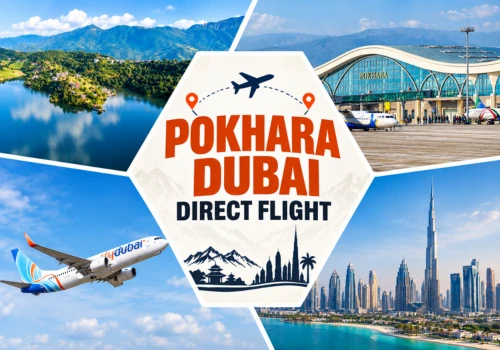
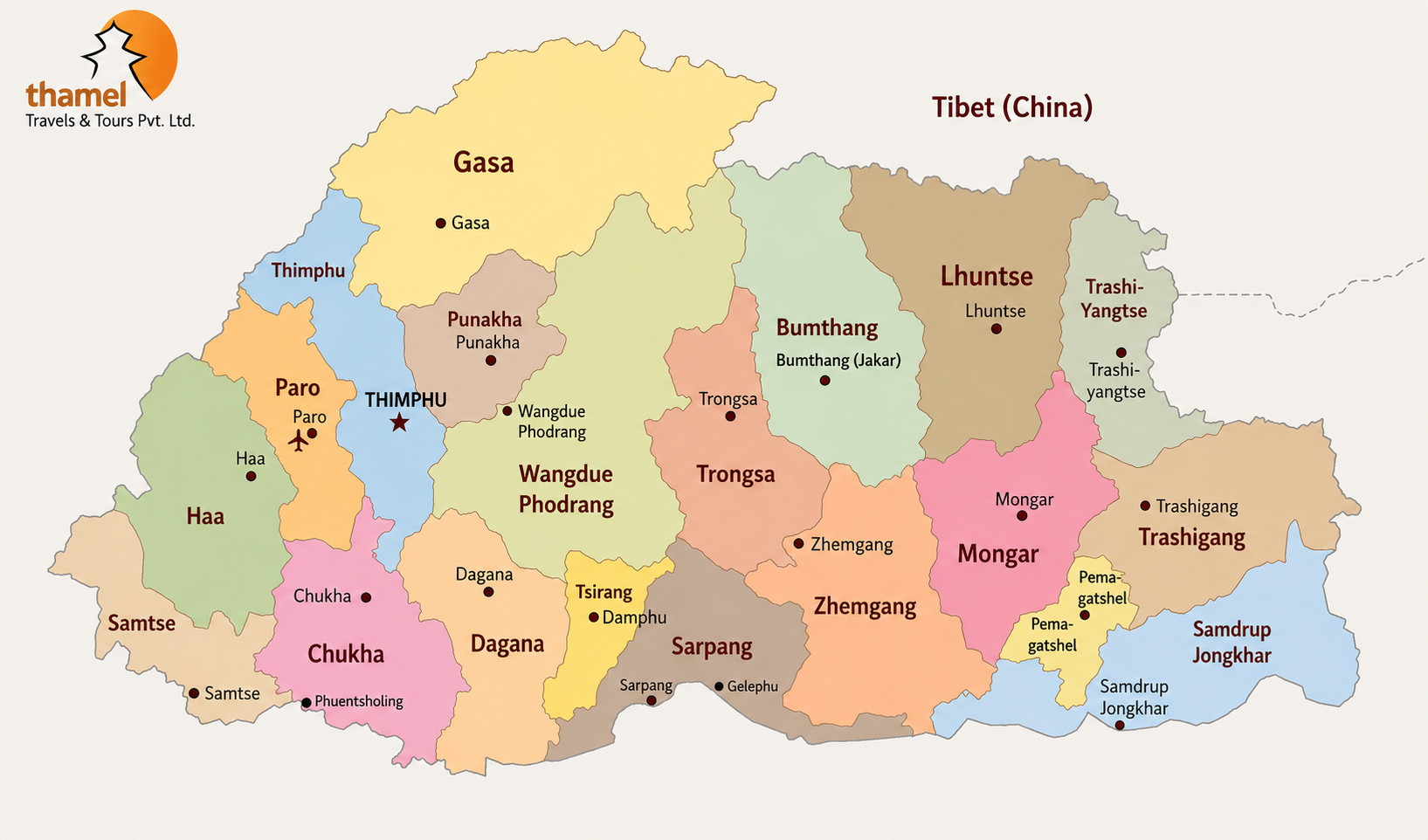
Bhutan is primarily accessible via flights into Paro International Airport from regional hubs in Nepal, India, Thailand, and Bangladesh via Drukair or Bhutan Airlines. Overland access is strictly limited to three southern border crossings shared with India (Phuentsholing, Gelephu, and Samdrup Jongkhar).
Paro International Airport — Direct Flight Routes
Route | Distance | Flight Time | Approx. One-Way Fare | Carrier(s) |
Kathmandu (Nepal) ↔ Paro | ~400–505 km | ~1 hr 5 min – 1 hr 20 min | USD 235–280 (economy) | Drukair, Bhutan Airlines |
New Delhi (India) ↔ Paro | ~1,240 km | ~2 hr – 2 hr 30 min | USD 250–450 | Drukair, Bhutan Airlines |
Kolkata (India) ↔ Paro | ~470 km | ~1 hr 20 min | USD 200–350 | Drukair, Bhutan Airlines |
Bagdogra (India) ↔ Paro | ~150 km | ~35–45 min | USD 150–250 | Drukair, Bhutan Airlines |
Guwahati (India) ↔ Paro | ~280 km | ~45 min | USD 180–280 | Drukair, Bhutan Airlines |
Bangkok (Thailand) ↔ Paro | ~2,300 km | ~4 hr | USD 400–600 | Drukair |
Dhaka (Bangladesh) ↔ Paro | ~600 km | ~1 hr 30 min | USD 250–350 | Bhutan Airlines |
Singapore ↔ Paro | ~3,500 km | ~6–7 hr (via stop) | USD 500–800 | Drukair (seasonal) |
Fares fluctuate by season and demand; Bhutan's two national carriers set fixed schedules with no low-cost alternative, so prices rarely drop significantly.
Areas of Total Tourist Activity
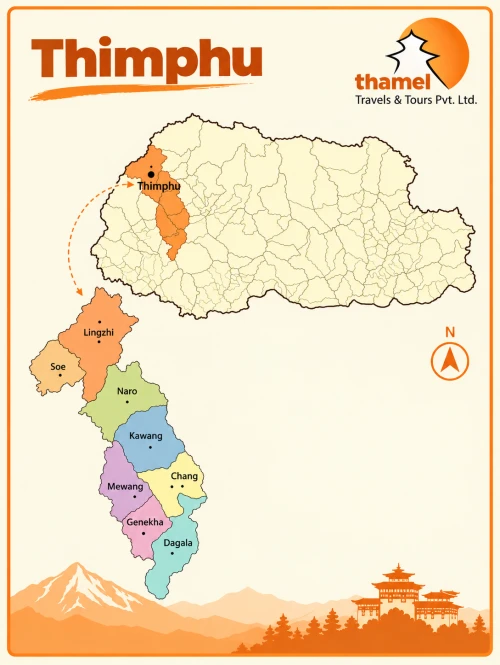
Tourist activity in Bhutan concentrates in a west-to-central arc: Paro and Thimphu (culture, monasteries, and urban life); the Punakha–Wangdue valley (dzongs, rivers, and rice terraces); Phobjikha/Gangtey (glacial valley and black-necked cranes); and the more remote central and eastern dzongkhags (Bumthang, Trongsa, Mongar, and Trashigang) for deeper cultural and trekking experiences.
Easily Accessible Areas for Touring in Bhutan
The Paro–Thimphu–Punakha loop is Bhutan's most accessible circuit of paved roads, short drive times (2–3 hours between towns), full tourist infrastructure, and doable comfortably in 4–6 days. This "golden triangle" is where the vast majority of first-time visitors spend their trip, since it requires no high-altitude trekking or long overland remote travel.
Internal Bhutan Driving Distances & Times
Route | Distance | Drive Time | Terrain |
Paro ↔ Thimphu | ~55 km | ~1–1.5 hr | Paved, easy |
Thimphu ↔ Punakha | ~75 km | ~2.5–3 hr | Mountain pass (Dochula, 3,100m) |
Punakha ↔ Wangdue | ~15 km | ~20–30 min | Easy |
Wangdue ↔ Gangtey/Phobjikha | ~75 km | ~2.5 hr | Mountain road |
Gangtey ↔ Trongsa | ~130 km | ~4–5 hr | Winding mountain road |
Trongsa ↔ Bumthang | ~68 km | ~2.5–3 hr | Mountain road |
Bumthang ↔ Mongar | ~190 km | ~7–8 hr | Remote, high pass (Thrumshingla, 3,800m) |
Mongar ↔ Trashigang | ~90 km | ~3 hr | Eastern hills |
Thimphu ↔ Phuentsholing (India border) | ~170 km | ~5–6 hr | Descends to plains |
Thimphu ↔ Gelephu (southern SAR) | ~200+ km | ~6–7 hr | Currently under upgrade |
Note: Bhutan has no domestic commercial flight network beyond a small Paro–Bumthang (Bathpalathang) route, so nearly all internal touring is done by road distances that look modest on a map often take much longer due to mountainous, winding terrain.
Geographical Areas of Adventure Tourism
Paro Valley & surrounding ridgelines – day hikes to Taktsang (Tiger's Nest) and nearby monastery trails
Jomolhari region (northwestern Bhutan) – classic high-altitude trekking with views of Mt. Jomolhari (7,326m)
Druk Path (Paro–Thimphu) – a popular 4–6 day moderate trek past alpine lakes
Bumthang & Central Bhutan – valley trekking, biking, and cultural trail combinations
Phobjikha Valley – gentle nature trekking and birdwatching
Snowman Trek (far north) – one of the world's most demanding treks, crossing multiple 5,000m+ passes over 3–4 weeks
Rivers of Punakha and Mo Chhu/Pho Chhu – whitewater rafting and kayaking
Popular Tourist Destinations
Paro Taktsang (Tiger's Nest Monastery): Bhutan's most iconic image, clinging to a cliff above Paro valley
Thimphu: capital city, Buddha Dordenma statue, weekend markets, Tashichho Dzong
Punakha Dzong: considered Bhutan's most beautiful fortress-monastery, at the confluence of two rivers Mo Chhu and Pho Chhu
Phobjikha Valley: winter home to endangered black-necked cranes
Bumthang Valley: the spiritual heartland, dense with ancient temples
Haa Valley: a quieter, less-visited valley opened to tourism in 2002
Mt. Gangkhar Puensum
Bhutan's own tallest peak, Gangkhar Puensum (7,570 m), holds a different distinction: it is the world's highest unclimbed mountain, since Bhutan has banned mountaineering above 6,000 m since 2003 out of respect for sacred peaks and to avoid ecological disruption. In the Dzongkha language, its name means "White Peak of the Three Spiritual Brothers."
Popular Tourist Routes
Classic Western Circuit: Paro → Thimphu → Punakha → (return) Paro — the standard 5–7 day introductory route
Central Bhutan Extension: Paro → Thimphu → Punakha → Gangtey/Phobjikha → Bumthang → Trongsa for 10–14 day cultural-immersion trips
Eastern Bhutan Route: Extending further to Mongar and Trashigang for travelers seeking untouristed, remote Bhutan
Trekking Add-ons: Druk Path or Jomolhari treks are commonly bolted onto the western circuit for active travelers
Top Spiritual Destinations in Bhutan
Paro Taktsang (Tiger's Nest) – Bhutan's holiest pilgrimage site, linked to Guru Rinpoche
Punakha Dzong winter seat of the Je Khenpo (chief abbot) and site of major religious ceremonies
Kyichu Lhakhang (Paro) – one of Bhutan's oldest temples, dating to the 7th century
Bumthang's temple cluster (Jambay Lhakhang, Kurjey Lhakhang) is considered the spiritual soul of the country
Chimi Lhakhang (near Punakha) – the "fertility temple," associated with the "Divine Madman" Drukpa Kunley
Gomkora (eastern Bhutan) – a meditation cave site significant enough that its pilgrims are exempt from tourist fees
Gelephu Mindfulness City (emerging) – a planned Vajrayana spiritual and wellness center as part of Bhutan's new southern development
Gelephu Mindfulness City (GMC)
Gelephu Mindfulness City (GMC) is a Special Administrative Region announced by King Jigme Khesar Namgyel Wangchuck in December 2023, spanning ~1,000 sq. km in Bhutan's southern plains near India's Assam border. Designed by Bjarke Ingels Group, it blends Vajrayana spiritual heritage with wellness infrastructure, an East-West health center, meditation retreats, a university, and eco-friendly "inhabitable bridges" for civic functions positioning Bhutan as a global wellness tourism hub.
Overall Government Tourism Policy
Bhutan's tourism policy rests on a single guiding philosophy: "High Value, Low Volume" (sometimes phrased "High Value, Low Impact"). In practice this means:
Sustainable Development Fee (SDF): A mandatory nightly fee for most foreign tourists currently USD 100 per person per night (reduced from USD 200 in 2023, locked at this rate through August 31, 2027), funding free healthcare, free education, environmental conservation, and infrastructure. Indian, Bangladeshi, and Maldivian nationals pay a separate, lower SAARC-region rate.
Mandatory licensed guides and operators: Independent, unguided travel is not permitted for most nationalities; all trips must be arranged through a Tourism Council of Bhutan-licensed operator.
No hard visitor cap, but a natural ceiling: Rather than fixed quotas, the SDF itself acts as a self-regulating filter on volume.
Environmental constraints baked into law: A constitutional mandate to maintain at least 60% forest cover indefinitely; a nationwide plastic bag ban since 2019; and a ban on mountaineering above 6,000 m.
Diversification beyond hydropower and tourism: Gelephu Mindfulness City reflects a broader push to reduce economic dependence on hydropower exports and traditional tourism by building a new investment, education, and wellness economy in the south.
Bhutan's Connectivity with Nepal and India
Bhutan - Nepal: No land border connects the two (India's Sikkim and West Bengal lie between them), so travel is exclusively by air a short, scenic Paro–Kathmandu flight operated by Drukair or Bhutan Airlines.
Bhutan - India: Bhutan's most extensive and practical link, with land crossings such as Phuentsholing–Jaigaon connecting directly to India, plus flights from Paro to Indian cities like Delhi, Kolkata, Guwahati, and Bagdogra. This makes India Bhutan's primary gateway to the outside world.
Bhutan's Regional Links at a Glance
Connection | Distance | Mode | Travel Time | Approx. Cost | Visa/Permit Note |
Paro ↔ Kathmandu (Nepal) | ~400–505 km | Flight only | ~1 hr 5 min–1 hr 20 min | USD 235–280 one-way | Nepal visa on arrival/e-visa for most nationalities |
Paro ↔ New Delhi (North India) | ~1,600 km | Flight | ~2.5–3 hr | USD 200–350 one-way | Indians need no visa; others require Indian visa |
Paro ↔ Kolkata/Guwahati/Bagdogra (North/East India) | ~600–900 km | Flight | ~1–1.5 hr | USD 150–250 one-way | Same as above |
Phuentsholing ↔ Jaigaon (India land border) | ~0 km (adjoining towns) | Overland (walk/car) | Minutes | Minimal (local transport only) | Open border for Indians; others need permit/visa arranged in advance |
Bhutan Trip Cost & Duration Benchmarks
Itinerary | Duration | Approx. Cost (per person, 2 pax, mid-range) | Key Components |
Bhutan only (Paro + Thimphu + Punakha) | 5–7 days | USD 1,400–2,000 | Bhutan SDF (~USD 100/night), package rate, guide & driver, entry fees |
Nepal + Bhutan | 10–12 days | USD 2,200–3,200 | Bhutan SDF, Bhutan package rate, KTM–PBH flights |
Price figures are indicative only. For exact tour offers we make, please let me know.
Practicality of Touring Nepal + Bhutan Together
It is genuinely practical and a well-trodden route for operators, but it demands realistic planning:
Nepal is the natural hub. Since Bhutan is fly-in/fly-out only, most combined itineraries are built around a Kathmandu base, with a side trip to Paro bookended around it.
Sequencing is flexible but planning isn't. Unlike a Tibet add-on (which needs a group visa processed in advance), Bhutan only requires booking through a licensed operator, but this still must be arranged before arrival, not on the fly.
Timeframe: A comfortable Nepal + Bhutan itinerary typically runs 7–10 days, around 3–4 days in Nepal and 4–6 days in Bhutan, with room to extend for trekking or additional Bhutan valleys (Punakha, Thimphu, Haa).
Budget reality: Costs vary by season and package quality, but a two-person, 7–10 day Nepal + Bhutan trip (3-star level, guides, permits, and Bhutan's SDF included) has been quoted in the range of roughly USD 2,200–3,200 per person before flights from home.
Regulatory friction is the main constraint, not distance. Nepal is open and independently travelable. Bhutan requires a licensed operator and daily SDF payment throughout the stay. None of this is prohibitive, but it does mean the Bhutan leg needs to be booked in advance; spontaneous, unplanned travel isn't realistic there, even though Nepal itself allows for it.