Introduction
Many people think of Nepal as a place that has big snowy mountains, tough trekking trails, and adventurous backpacking trips only. That version of Nepal exists, and it's wonderful. But there's another version of Nepal, one with heated infield pools looking at Annapurna, Newari palaces converted into five-star hotels, and helicopter journey facilities that skip the twelve-day trek and put you at Everest Base Camp before lunch.
Luxury travel in Nepal doesn’t mean pretending the mountains aren't there. It's about experiencing them without sacrificing your comfort.
Top Luxury Destinations in Nepal
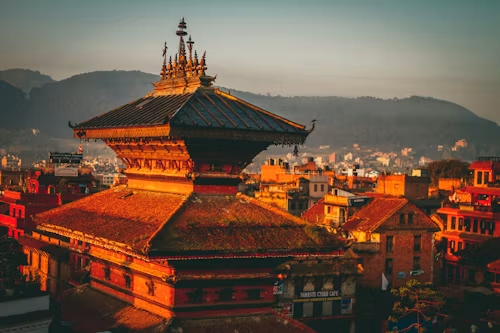
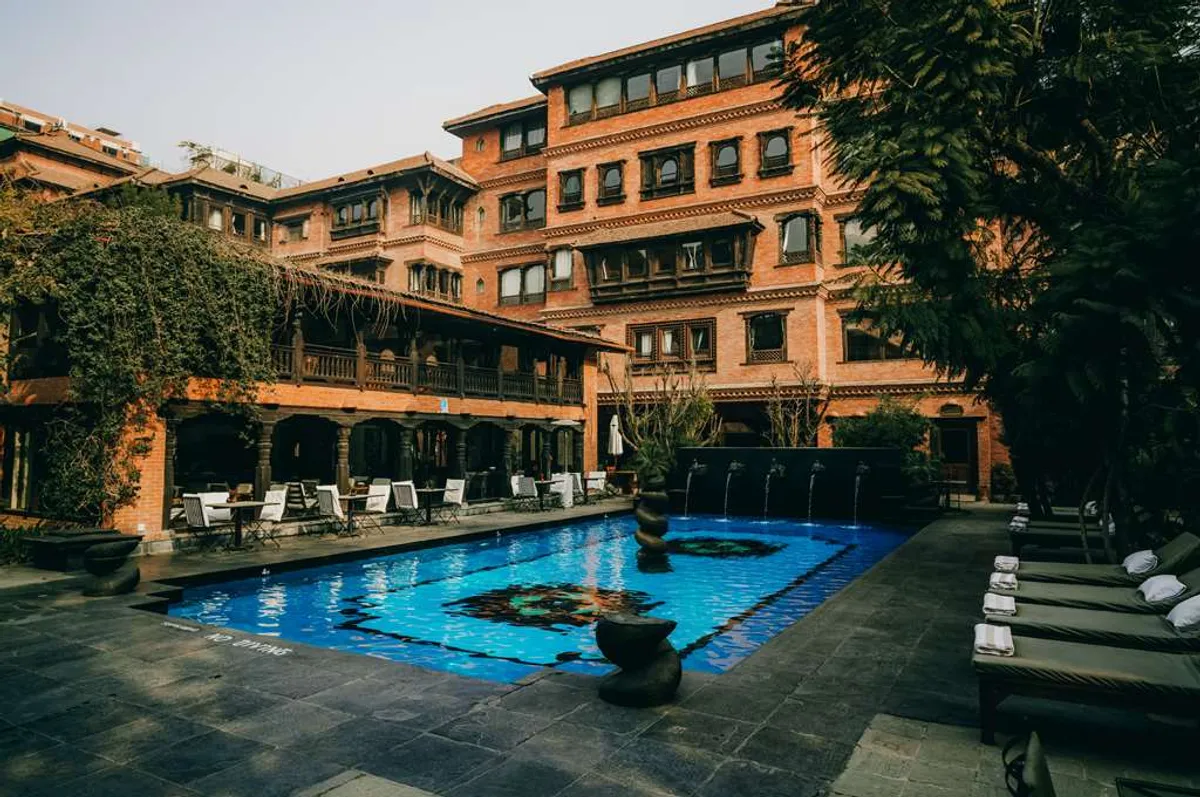
Kathmandu Valley is the starting and ending point of most luxury itineraries available in Nepal. This region alone consists of three UNESCO World Heritage cities: Kathmandu, Patan, and Bhaktapur. Providing you an excellent preview of the cultural and architectural side of Nepal. The Kathmandu Valley is highly influenced by its ancient Newari culture, and the luxury properties here lean into that rather than around it. Dwarika's Hotel built its reputation on rescuing centuries-old carved wood from demolished buildings and constructing the hotel around it, so a stay doubles as a walk through Newari craftsmanship as much as it does a five-star night's sleep.
Pokhara, also known as the tourism hub of the country, sits on the shores of Phewa Lake, with the Annapurna range reflected in the water on a clear morning. Pokhara is not meant for sightseeing marathons, but it’s a destination built for boat rides, lakeside dinners, and short scenic flights. With the establishment of countries' some of the most premium accommodations, it is a primary choice for any luxury itinerary available in Nepal.
Sarangkot, just above Pokhara, is where you go for the view rather than the town. The luxury resorts built on this ridge look straight across at the Annapurna Himalaya, and a sunrise here, watching the range go from grey to gold, is one of the more reliable payoffs in the whole country.
Ghandruk sits deeper into the Annapurna region, a Gurung village built into a hillside with the range rising directly behind it. A handful of boutique luxury lodges now operate here, which means the mountain culture, stone houses, prayer flags, and terraced fields come with a proper bed and a real dinner rather than a teahouse bunk.
Dhampus works as the lighter version of the same idea. It's reachable with a short hike rather than a multi-day trek, and the luxury mountain lodges here put Annapurna views within reach of travelers who want the scenery without committing to days on the trail.
Mustang, on Nepal's northern edge bordering Tibet, is the outlier on this list in the best way. Shinta Mani's presence in the region has turned Mustang into a genuine experiential-luxury destination, with arid high-desert landscapes, centuries-old Buddhist monasteries, and cave dwellings carved into cliffs, paired with a level of comfort that didn't exist here a decade ago.
Nagarkot and Dhulikhel, both a short drive from Kathmandu, are the hill-station stops. Properties like Club Himalaya in Nagarkot and Dwarika's Resort in Dhulikhel exist mainly for one thing: a sunrise over the Himalayan range with coffee in hand and the view of the Everest and other mountain ranges.
The Everest region (Khumbu) is another outlier. There's no five-star hotel at Base Camp, but the Everest View Hotel near Syangboche, built at nearly 3,880 meters, remains one of the highest-altitude hotels in the world, and breakfast on the terrace here, with Everest itself in frame, is the kind of view most trekkers spend two weeks earning.
Chitwan National Park, down in the Terai lowlands, is where the wildlife is. Properties like Barahi Jungle Lodge and Meghauli Serai, run under the Taj Safaris banner, put you within reach of one-horned rhinos and, with real luck, a Bengal tiger, safari included, without anyone sleeping in a tent.
Top Experiential Luxury Activities in Nepal
There are few experiences that show up on nearly every high-end Nepal itinerary, and for good reason.
Journey to Everest Base Camp by helicopter skips the twelve-day approach entirely, landing you near Base Camp for photos and a mountain-air breakfast before flying back to Kathmandu the same afternoon. It's the fastest way to stand in front of Everest without lacing up boots for a single day.
For those who want the trail without giving up comfort, a slow-paced EBC trek with stays at the Yeti Mountain Lodge chain keeps the walking real, allows gradual acclimatization, and has proper trail days but swaps standard teahouse bunks for heated rooms, hot showers, and better food at altitude.
Breakfast with Everest at Hotel Everest View in Syangboche is less an activity than a setting: a terrace table at nearly 3,880 meters with the summit itself framed in the background. Few hotels anywhere put a five-star breakfast this close to the world's highest peak.
A Namobuddha and Panauti day trip paired with a stay at Dwarika's Sanctuary in Dhulikhel combines two of the valley's quieter Buddhist and Hindu heritage sites with an evening back at one of the region's most restorative hillside properties.
Guided cultural exploration of Kathmandu's heritage, based at Dwarika's Hotel, turns the city's durbar squares and temple courtyards into something legible rather than overwhelming, with the hotel itself, built around salvaged centuries-old woodwork, doubling as part of the experience.
Staying at Chandragiri Hills Resort gets you a cable car ride up and a wide-angle payoff: the entire Kathmandu Valley laid out below, with the major Himalayan range, Everest, Langtang, and Ganesh Himal among them, visible on a clear day.
At Barahi Jungle Lodge in Chitwan National Park, the routine is patience rather than spectacle: jeep and canoe safaris where a rhino crossing the river is a near-certainty and a tiger sighting is the rare, quiet jackpot everyone's actually hoping for.
The Annapurna range seen from Hotel Annapurna View at Sarangkot, just above Pokhara, is at its best at first light, when the peaks catch color before the valley below has even woken up.
A stay at Pavilion Himalayas Lake View Resort in Pokhara pairs Phewa Lake's stillness with an easy day hike up to the World Peace Stupa, a short climb rewarded with one of the better lake-and-mountain views in the country.
Guided yoga at Tiger Mountain Lodge in Pokhara, practiced with the Annapurna range as a backdrop, is as much about the setting as the session; morning light on the peaks tends to do more for stillness than any instructor can.
For a gentler pace, exploring Pokhara in November while based at Dorje's Resort or Fishtail Lodge takes advantage of the year's clearest, calmest stretch of weather, ideal for lakeside afternoons rather than packed itineraries.
A 4-day hike through the Annapurna foothills, Dhampus to Majhgaon to Landruk to Ghandruk, staying at Mountain Lodges of Nepal properties (formerly Ker & Downey Lodges), is about as close as luxury trekking gets to the real thing here: short daily walking distances through Gurung villages and terraced hillsides, with proper lodges and real beds waiting at the end of each one.
And in the far north, guided exploration of Mustang's villages, staying at Shinta Mani Mustang, a Bentley Collection property, pairs high-desert monasteries and cliffside cave dwellings with a level of design-forward comfort that's genuinely new to this part of the Himalayas.
What Determines a Luxury Vacation's Costs in Nepal?
Nepal is, in relative terms, still less expensive than comparable luxury destinations in Southeast Asia, which is part of why five-star travel here often surprises first-time visitors with how much comfort their budget buys. Costs vary enormously depending on season, hotel category, and how much time you spend in the mountains versus the valley, but a few benchmarks help set expectations.
A well-appointed 8- to 10-day itinerary combining Kathmandu, Pokhara, and Chitwan, staying at properties like Dwarika's, Barahi Jungle Lodge, and the best resorts in Lakeside or Sarangkot in Pokhara, typically runs somewhere in the $3,000 to $6,000 per person range for double occupancy, including private guides, transfers, and most meals. Add a helicopter day trip to Everest, and the total climbs quickly, since chartering a helicopter is priced by flight hour rather than per person, and a shared Everest Base Camp heli tour alone commonly lands around $2,500 to $3,500 per person depending on group size.
What actually drives the number up isn't the hotel rate so much as internal flights, private vehicles versus shared transport, and whether you're chartering a helicopter solo or splitting it with others.
What Defines a Luxury Vacation in Nepal?
Luxury in Nepal looks completely different as compared to luxury in the Maldives or Dubai, and travelers who arrive expecting similar things can be disappointed. What Nepal offers instead is comfort layered on top of genuine cultural depth and dramatic geography that money alone can't manufacture.
It shows up in details: a private guide who actually grew up in the valley and can explain a temple's history rather than reciting a script; a lodge in Chitwan built with sustainable materials; and a helicopter pilot who's flown the Khumbu for two decades and knows exactly which ridge gives you the best Everest photo. Five-star service exists, but it coexists with a country still building out its infrastructure.
Best Time to Plan a Luxury Vacation in Nepal
October and November are generally considered Nepal's best months for travel: post-monsoon skies are clear, mountain views are sharp, and daytime temperatures in the valley are comfortable. This is also peak season, so hotel rates and helicopter availability both tighten up, and booking three to six months ahead matters if you want specific properties.
March through May is the second window, when rhododendrons bloom across the mid-hills and Everest region trekking routes reopen after winter. Visibility can be slightly hazier than autumn due to pre-monsoon dust, but it's a strong choice for anyone combining a luxury base with some genuine trekking.
December to February offers cold, clear mountain air and fewer crowds, but access to high-altitude properties near Everest may be limited, and certain passes may be closed. Monsoon season is from June to September. It’s lush, quiet, and often overlooked, but a short luxury escape, staying at luxury resorts at Nagarkot and Sarangkot, could be an unforgettable trip for a lifetime.
Why is Nepal a Worthy Luxury Vacation Destination?
Because very few places let you do this many genuinely different things inside a ten-day window: fly past the highest mountain on earth in the morning, walk through a 15th-century royal square by afternoon, and watch a rhino cross a river from a jungle lodge deck by evening. That range, all packed into a country roughly the size of Arkansas, is rare.
There's also the fact that Nepal's luxury infrastructure has matured considerably. Properties like Dwarika's and Taj's Meghauli Serai operate at a genuine international five-star standard, run largely by Nepali hospitality staff who bring depth of local knowledge that imported luxury brands elsewhere often can't match.
Luxury Trekking: Adventure Without Compromising Comfort
Full luxury trekking in Nepal generally means one of two models. The first keeps you on a real trail, walking the same routes as everyone else but with private guides, porters carrying the load, upgraded teahouses or dedicated luxury lodges along routes like the Everest or Annapurna regions, and hot showers and proper meals arranged in advance rather than left to chance. Lodges like the Yeti Mountain Home chain along the Everest trail fall into this category: still a trek, still real altitude gain, but with duvets and espresso machines at the end of the day.
The second model minimizes walking almost entirely, using short flights and helicopters to reach high-altitude viewpoints, with only light walking once you land. This suits travelers who want the visual payoff of the Himalayas without the physical demands of multi-day trekking or who simply don't have two weeks to spare.
Either way, the same appeal holds: you get the geography, the altitude, and the sense of scale that makes Nepal's mountains famous, without sacrificing the basics of comfort that make a vacation feel like a vacation rather than an expedition.
Everest Helicopter Tour: The Ultimate Luxury Journey to the Himalayas
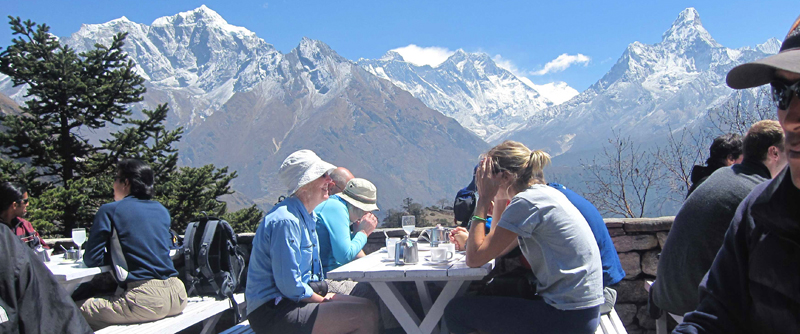
The classic version departs Kathmandu early, when mountain air is calmest, and flies roughly 45 minutes to an hour toward the Khumbu, often stopping at Kala Patthar or the Everest Base Camp area for photos and, on longer versions, breakfast at a lodge in Syangboche or Namche Bazaar with Everest visible from the dining table. Some operators route through Lukla as well, giving a brief look at the airstrip regularly cited as one of the most dramatic landings in commercial aviation.
Weather is the one variable no amount of money controls. Mountain flights get delayed or cancelled on short notice when cloud cover moves in, and any operator worth booking will tell you this upfront rather than promising guaranteed views. Building a buffer day into the itinerary, rather than scheduling the flight on your last morning in Nepal, is the single most useful piece of practical advice from us for this experience.
Luxury Wildlife Safari in Chitwan National Park
Chitwan, Nepal's oldest national park, sits in the Terai lowlands and holds one of the last strongholds of the greater one-horned rhinoceros, along with Bengal tigers, sloth bears, gharial crocodiles, and well over 500 recorded bird species. Luxury lodges here, Barahi Jungle Lodge and Meghauli Serai among the best known, typically combine jeep safaris, canoe rides along the Rapti River, and guided village walks through Tharu communities, whose culture is distinct from the hill and mountain communities most visitors associate with Nepal.
Sightings aren't guaranteed; tigers especially are elusive, but rhino encounters are common enough that most multi-day stays produce at least one close sighting. Evening programs often include Tharu cultural performances and dinners served in open-air pavilions, which round out what is otherwise a full day of early starts and dust.
Exclusive Cultural Experiences in Kathmandu Valley
The valley's three durbar squares, Kathmandu, Patan, and Bhaktapur, each developed under a separate Malla kingdom before Nepal's unification in the 18th century, and each retains a distinct architectural character as a result. A private guide who can walk you through what separates Patan's Krishna Mandir from Bhaktapur's 55-Window Palace turns an afternoon of temple-viewing into something closer to a condensed history course.
Beyond the squares, exclusive experiences worth building into an itinerary include a private audience at the Kumari Ghar to learn about Nepal's living goddess tradition, a guided visit to Pashupatinath, one of Hinduism's most significant Shiva temples, timed around the evening aarti ceremony, and a private cooking class focused on Newari cuisine, which differs meaningfully from the dal bhat served elsewhere in Nepal and rarely gets much attention from visitors passing through quickly.
Wellness, Spa, and Yoga Retreats in Nepal
Nepal has announced 2027 a Wellness Tourism Year and it is not for nothing! Nepal's wellness scene draws on both its Ayurvedic and Buddhist traditions, and luxury hotels Dwarika's group have built out full spa wings offering traditional Ayurvedic therapies alongside more conventional treatments. Yoga retreats, often based in Pokhara or the hills around Kathmandu, pair morning sessions with mountain views and tend to run anywhere from a long weekend to two full weeks.
For travelers who want a genuinely restorative angle to a Nepal trip rather than a purely sightseeing-driven one, pairing two or three nights of city and cultural touring with a few quiet days at a hill retreat, doing yoga in the morning and very little else or wellness treatments in the afternoon, will definitely produce a better-balanced trip
Fine Dining and Luxury Culinary Experiences
Kathmandu's fine dining scene has grown substantially over the past decade. Krishnarpan, the signature restaurant at Dwarika's, serves multi-course Nepali tasting menus built around historic royal recipes, some drawing on ingredients and techniques rarely used outside private kitchens. Beyond the set-menu experiences, a private cooking class with a local chef, learning to make momos or a proper Newari feast known as a khaja set, gives a more hands-on alternative experience.
Luxury Family Vacations in Nepal
Nepal works better for families than its adventure-travel reputation suggests, provided the itinerary is built around the family's actual physical limits and group interests. Chitwan's jungle lodges are a natural fit for kids old enough to sit through a jeep safari, and most offer family suites or connecting rooms. Pokhara's boating and short cable car ride to Sarangkot are low-effort, high-payoff activities that work across a wide age range.
Mountain flights are an easier way to give children a look at Everest than a multi-day trek, and several operators in Kathmandu run family-oriented cultural tours with shorter walking distances and more frequent breaks built in. The main planning consideration is altitude: anything above roughly 3,000 meters warrants a slower pace and closer attention to how kids are adjusting, regardless of how fit they are at sea level.
Sample 10-Day Luxury Nepal Itinerary
Days 1-3, Kathmandu Valley: Arrival and stay at a heritage property like Dwarika's Hotel. Private guided tours of Kathmandu Durbar Square, Patan, and Bhaktapur, a Pashupatinath evening aarti visit, and a Newari cooking class or dinner at Krishnarpan.
Day 4, Everest mountain flight or helicopter day: An early morning scenic flight or, for a fuller experience, a helicopter tour to Kala Patthar with breakfast at altitude before returning to Kathmandu by midday.
Days 5-6, Chitwan National Park: A short flight to Bharatpur and a transfer to a jungle lodge such as Barahi Jungle Lodge or Meghauli Serai, with jeep and canoe safaris, a village walk, and evening Tharu cultural performances.
Days 7-9, Pokhara: Flight to Pokhara, lakeside resort stay, boating on Phewa Lake, a sunrise trip to Sarangkot for Annapurna views, and a free day for spa treatments or a short, easy walk in the surrounding hills.
Day 10, Departure: Return flight to Kathmandu and onward connection, ideally with a buffer of a few hours in case of weather delays affecting the domestic flight.
Travel Tips for a Luxury Vacation in Nepal
Book domestic flights and helicopter charters well in advance during October, November, March, and April, since availability tightens considerably in peak weeks. Build at least one buffer day into any itinerary involving mountain flights, since weather cancellations are common and rebooking on short notice can be difficult during high season.
Carry cash in Nepali rupees for smaller purchases and tips, since card acceptance drops off quickly outside major hotels, and altitude affects even short helicopter stops, so anyone with cardiovascular or respiratory conditions should check with a doctor before booking high-altitude flights or lodge stays above 3,000 meters. Finally, work with a ground operator who has direct relationships with the hotels and helicopter companies rather than booking everything through a generic online platform. In a country where infrastructure can be unpredictable, having someone locally who can solve a problem in real time matters more here than in most luxury destinations.
Final Thoughts: Plan Your Dream Luxury Vacation in Nepal
Nepal rewards travelers who come with some flexibility built into their expectations. The mountains don't always cooperate, and a helicopter flight might get pushed a day. None of that undercuts what makes the country worth the trip: a stretch of land where UNESCO heritage sites, jungle wildlife, and the highest mountains on the planet all sit within a few days' reach of each other, comfortably, if you plan it with a bit of care and a good local operator behind you.
Frequently Asked Questions (FAQs)
Is Nepal a good destination for a luxury honeymoon?
Yes. Properties like Dwarika's Resort in Dhulikhel and lakeside resorts in Pokhara are popular honeymoon bases, often combined with a scenic Everest flight and a few nights at a jungle lodge in Chitwan for variety.
Do I need to trek to experience the Himalayas in comfort?
No. Scenic mountain flights and helicopter tours from Kathmandu let you see Everest and the surrounding peaks up close without multi-day trekking, though travelers who do want some walking can combine short, guided day hikes with a comfortable base.
What's the best time of year for a luxury trip to Nepal?
October and November offer the clearest skies and most reliable weather for mountain flights, with March through May as a strong second option. December through February is colder but clear, while the monsoon months of June through September are quieter and better suited to valley and Chitwan-based itineraries.
How many days should a luxury Nepal itinerary include?
Eight to ten days is typically enough to cover Kathmandu Valley, one mountain experience, and either Chitwan or Pokhara without feeling rushed. Longer trips of twelve to fourteen days allow for both Chitwan and Pokhara, plus a slower pace in the valley.
Is it safe to fly by helicopter to Everest Base Camp?
Helicopter tours in the Everest region are operated by established Nepali aviation companies with experienced high-altitude pilots, and flights are grounded when weather conditions aren't suitable. As with any mountain flying, schedules should be treated as flexible rather than fixed.