Introduction to Kathmandu Valley: Nepal’s Cultural and Historical Heart
Kathmandu Valley is the cultural and historical heart of Nepal. It is known for its ancient temples, UNESCO World Heritage Sites, traditional architecture and living cultural traditions. Sightseeing of Kathmandu's heritage sites is not limited to visiting sites or taking pictures. It can involve a deep emmersion into the ancient and medieval cultures, heritage and traditions.
It is situated in the hills of central Nepal at an elevation of about 1,400 metres. It is a bowl shaped valley surrounded by green ridges, and on clear days the Himalayan peaks can be seen beyond them. For centuries it has been the political, religious and artistic centre of Nepal.
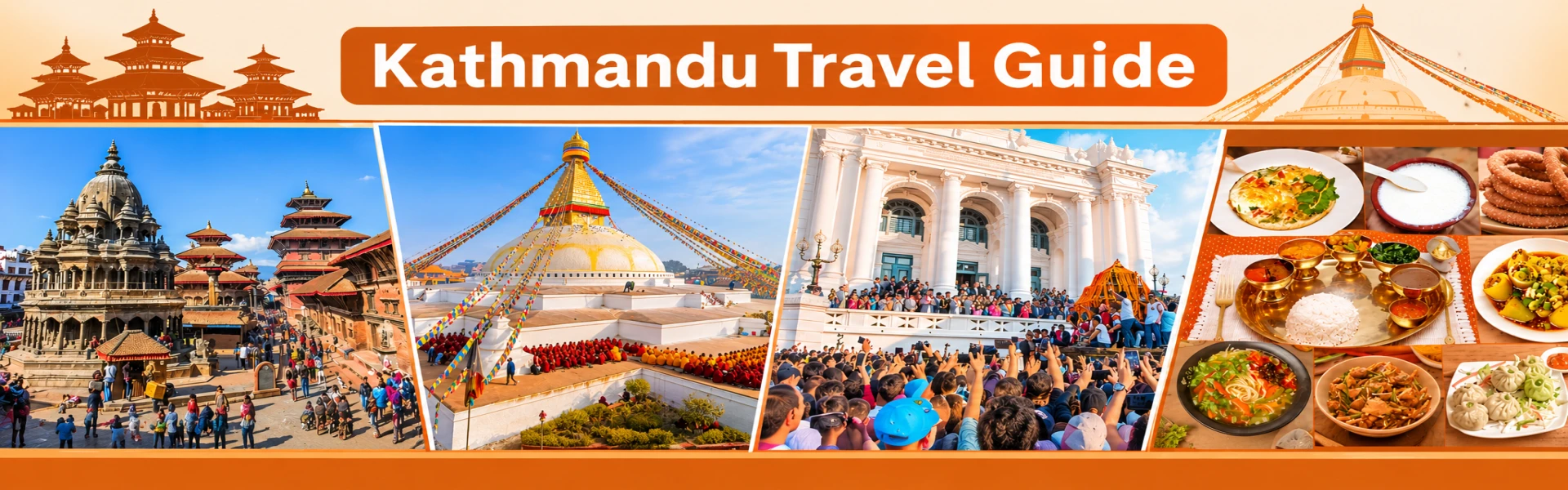
The valley is home to three historic cities: Kathmandu, Patan (also called Lalitpur) and Bhaktapur. Each developed as a separate royal city, and each built its own palace square, temples, courtyards and festivals. Hinduism and Buddhism have shaped the valley's history and everyday life for centuries. The Newar communities have preserved a rich heritage of art, architecture, cuisine, language and festivals, while ancient temples, Buddhist stupas and monasteries remain active places of worship. This guide explores the major attractions, cultural traditions and practical travel information to help you discover Kathmandu Valley
Kathmandu Valley UNESCO World Heritage Sites
UNESCO inscribed Kathmandu Valley as a World Heritage Site in 1979. The UNESCO World Heritage Centre listing for Kathmandu Valley describes seven monument zones that together show the valley’s religious art and architecture. The inscription recognises the density of temples, palaces, stupas and shrines in a small area, many of them still used for daily worship.
UNESCO Monument Zone | City or Location | Historical and Cultural Importance |
Kathmandu Durbar Square | Kathmandu | Royal palaces, courtyards, temples and traditional architecture |
Patan Durbar Square | Lalitpur | Newar craftsmanship, temples and palace architecture |
Bhaktapur Durbar Square | Bhaktapur | Medieval architecture, traditional squares and cultural heritage |
Swayambhunath Stupa | Kathmandu | Important Buddhist pilgrimage site and religious harmony |
Boudhanath Stupa | Kathmandu | Major Tibetan Buddhist centre and pilgrimage destination |
Pashupatinath Temple | Kathmandu | Important Hindu pilgrimage site dedicated to Lord Shiva |
Changu Narayan Temple | Bhaktapur District | Ancient Hindu temple dedicated to Lord Vishnu |
The three Durbar Squares (the word Durbar means royal palace) show how the Malla kings competed in building temples and palaces, mainly between the 15th and 18th centuries. Swayambhunath and Boudhanath represent the Buddhist side of the valley. Pashupatinath and Changu Narayan represent its Hindu side.
Ancient and Iconic Temples of Kathmandu Valley
Kathmandu Valley is home to numerous ancient temples, each reflecting the region's rich religious history, traditional architecture and cultural heritage. Many of these temples have undergone renovations and reconstruction over the centuries, while their religious importance and traditional practices have continued across generations. For an overview of the valley's heritage and attractions, refer to the Nepal Tourism Board's Kathmandu Valley guide.
Pashupatinath Temple: The Sacred Centre of Hindu Worship
Pashupatinath stands on the banks of the Bagmati River in eastern Kathmandu. It is dedicated to Shiva in his form as Pashupati, Lord of Animals. It is one of the most important Hindu pilgrimage sites in Nepal, attracting devotees from across the country and neighbouring India. Worship at the site is very old, but the present main temple, a two tiered pagoda with gilded roofs, is generally dated to the late 17th century. It replaced earlier structures.
The riverside ghats at Pashupatinath are used for Hindu cremations. Hindus believe that the sacred Bagmati helps the departed on their journey, so families bring their dead here. Maha Shivaratri, the great night of Shiva, brings huge crowds here each year. Non Hindu visitors are not allowed inside the main temple. They can still walk through the complex and view the temple from the opposite bank of the river, where steps and terraces give a clear view of the evening aarti, the ritual of offering light.
Swayambhunath Stupa: The Ancient Buddhist Heritage of Kathmandu
Swayambhunath crowns a hill on the western side of Kathmandu, and from its terrace you can see across the whole valley. The name means Self Arisen, and it is associated with a Buddhist legend about the creation of Kathmandu Valley by the bodhisattva Manjushri. The site dates back to the Licchavi period, around the fifth century, and is recognised by its white dome, golden spire and the Buddha's painted eyes facing four directions.
The hilltop complex features prayer wheels, small shrines, votive stupas and the Harati Temple. Popularly known as the Monkey Temple, Swayambhunath is an important place of worship for Newar Buddhists and Tibetan Buddhists, while Hindu devotees also visit. To explore more Buddhist heritage sites, see our Kathmandu Buddhist heritage tour.
Boudhanath Stupa: A Living Centre of Tibetan Buddhist Culture
Boudhanath Stupa, located in northeastern Kathmandu, is one of the largest spherical stupas in the world and an important centre of Tibetan Buddhism. Its massive white dome, gilded spire and Buddha's painted eyes make it one of the valley's most recognisable landmarks. The area became an important centre for Tibetan Buddhist communities, particularly after many Tibetans settled in Nepal following 1959. Today, several monasteries surround the stupa, reflecting different Tibetan Buddhist traditions.
The main daily ritual is the kora, the clockwise walk around the stupa. Pilgrims walk, chant mantras, spin prayer wheels and sometimes prostrate along the path. Many light butter lamps in the surrounding shrines, especially in the early morning and evening. Visitors can experience this living Buddhist tradition while respecting local customs. Those interested in a wider pilgrimage can explore our Delhi to Kathmandu Buddhist pilgrimage tour.
Changu Narayan Temple: An Important Heritage Site of Ancient Nepal
Changu Narayan stands on a hilltop ridge north of Bhaktapur, away from the busy city squares. It is dedicated to Vishnu in the form of Narayan and is considered one of the oldest Hindu temple sites in the valley. A stone pillar in the courtyard carries an inscription of Licchavi King Manadeva, dated to 464 CE, making it one of the earliest known historical inscriptions in Nepal.
The temple features traditional two tiered pagoda architecture, intricate wooden carvings and beautiful stone and metal sculptures. A statue of Garuda, the mythical vehicle of Lord Vishnu, kneels facing the temple. The courtyard offers visitors an opportunity to appreciate the valley's ancient craftsmanship, religious traditions and architectural heritage.
Taleju Temple and the Historic Temples of Kathmandu Durbar Square
Kathmandu Durbar Square, also known as Hanuman Dhoka, was once the royal seat of the Malla and Shah kings. The historic square is home to several important temples and monuments, including Maju Deval, Kal Bhairav and the old royal palace. Taleju Temple, built during the reign of King Mahendra Malla in the 16th century, is dedicated to Taleju Bhawani, the patron goddess of the Malla kings. It remains an important religious and historical landmark in Kathmandu.
The temple is generally closed to the public and opens to worshippers on Maha Navami during Dashain. Nearby, Kumari Ghar is the traditional residence of the Kumari, Nepal's Living Goddess, who is worshipped as a manifestation of the goddess Taleju. Visitors may see the Kumari during designated public appearances from the courtyard of her residence. Exploring these historic courtyards and temples offers insight into Nepal's royal history, religious traditions and living cultural heritage. Our six day Kathmandu Valley heritage and cultural tour includes guided a guided exploration of this historic area.
Krishna Mandir and the Heritage of Patan Durbar Square
Krishna Mandir, located in Patan Durbar Square, is a remarkable stone temple built in 1637 during the reign of King Siddhi Narasimha Malla. Dedicated to Lord Krishna, the temple is known for its distinctive Shikhara style architecture, which differs from the traditional brick and timber pagoda temples found elsewhere in Kathmandu Valley. Its beautifully carved stone friezes depict scenes from the Mahabharata and Ramayana, showcasing the artistic skills of traditional Newar craftsmen.
Patan Durbar Square also features historic royal courtyards, including Mul Chowk and Sundari Chowk, as well as the Patan Museum, which displays traditional metalwork, sculptures and religious art. Nearby, the Golden Temple, also known as Hiranya Varna Mahavihar, is an important Buddhist monastery known for its intricate metalwork and traditional Newar Buddhist practices. Together, these sites reflect Patan's rich artistic, religious and architectural heritage.
Nyatapola Temple: The Five Storey Pagoda of Bhaktapur
Nyatapola stands in Taumadhi Square in Bhaktapur. Its name comes from Newar words meaning five roofs, and it is the tallest pagoda temple in Nepal, at about 30 metres. King Bhupatindra Malla had it built in 1701 and 1702, according to common historical accounts. It is dedicated to Siddhi Lakshmi, a tantric goddess. Its five tiered roof structure is an outstanding example of traditional Newar architecture
A steep staircase leads to the temple entrance, with pairs of stone guardians placed along the steps. These include wrestlers, elephants, lions, griffins and the goddesses Baghini and Singhini. According to local tradition, each pair is ten times stronger than the pair below. The temple survived major earthquakes, including the devastating earthquake of 1934, and remains an important symbol of Bhaktapur's architectural heritage. Nearby attractions include Bhairabnath Temple in Taumadhi Square and the 55 Window Palace and Golden Gate in Bhaktapur Durbar Square.
Newar Culture: The Living Heritage of Kathmandu Valley
The Newars are the indigenous people of Kathmandu Valley, and their language is Nepal Bhasa. Much of what visitors admire in the valley, including its temples, craft traditions, festivals and food, comes from Newar communities. Newar society includes both Hindu and Buddhist families, and many religious practices and cultural traditions are shared between the two.
Traditional Newar Architecture and Wood Carving
Newar architecture is known for its use of fired red bricks and finely carved timber. Houses are often built around inner courtyards, called chowk, and many open onto a shared square or a bahal, a Buddhist monastery courtyard. Carved wooden windows, such as the famous Peacock Window in Bhaktapur, show the skill of Newar woodcarvers.
Pagoda temples, with their tiered roofs and carved struts, are a Newar speciality. Many craft families continue to pass their traditional skills from one generation to the next, preserving local knowledge that remains valuable in the restoration of historic buildings across the valley.
Newar Cuisine and Traditional Food Culture
Newar cuisine is an important part of Kathmandu Valley's cultural heritage and is closely connected to festivals, family gatherings and religious rituals. It features a variety of traditional dishes made with rice, lentils, meat, vegetables and local spices. Some popular Newar foods visitors may encounter include:
Yomari: A steamed rice flour dumpling filled with chaku (molasses) and sesame. It is made during Yomari Punhi, a harvest festival in the winter months.
Bara: A savoury pancake made from ground black lentils, often pan fried and served at feasts. A version with egg is common.
Chatamari: A thin rice flour crepe topped with ingredients such as minced meat, egg, vegetables and spices. Often called Newar pizza, it is popular at festivals and family gatherings.
Samay Baji: A traditional Newar ceremonial platter featuring beaten rice, roasted meat, boiled egg, black soybeans, ginger, pickles and other accompaniments. It is served during religious ceremonies, festivals and special gatherings, with vegetarian variations also available.
Juju Dhau: A rich, creamy sweet yoghurt traditionally made in clay pots and famous in Bhaktapur. Its name means "king of curd", and it is an important part of the city's food culture.
Kwati: A soup made from sprouted mixed beans, traditionally eaten around Janai Purnima in August.
Traditional Music, Dance and Cultural Performances
Newar music is closely connected to religious ceremonies, festivals and community life. Traditional musical groups play instruments such as the dhimay, a large drum, along with cymbals and other traditional instruments during processions and celebrations. Local musical groups often accompany chariot processions through the streets, creating an important part of the valley's festive atmosphere.
Masked dances are another important part of Newar cultural heritage. The Lakhey dance is performed during Indra Jatra, while the Navadurga dance of Bhaktapur features masked performers representing nine manifestations of the goddess Durga. Charya Nritya is a sacred Buddhist dance performed by Vajrayana Buddhist priests as part of religious practice and meditation. These performances are rooted in religious beliefs and traditions, so visitors should appreciate them as cultural and spiritual practices rather than simply as entertainment.
Unique Religious Traditions and Cultural Practices of Kathmandu Valley
Kumari Tradition: The Living Goddess of Kathmandu
The Kumari tradition is one of Nepal's most distinctive cultural and religious practices. A Kumari is a young girl worshipped as the living manifestation of the goddess Taleju. The Kathmandu Kumari lives in Kumari Ghar beside Kathmandu Durbar Square, while Patan and Bhaktapur also maintain their own Kumari traditions. At a high level, the Kathmandu Kumari is chosen from the Shakya community of Newar Buddhists, by a group of priests who look for specific signs and qualities. She leaves her role when she reaches puberty, and a new Kumari is chosen. She makes public appearances during certain festivals, most famously Indra Jatra. The tradition reflects the historical connection between the Malla kings and the goddess Taleju, while stories about the goddess and the kings belong to local belief and legend. Visitors should respect the Kumari's privacy and follow photography restrictions at Kumari Ghar.
Daily Worship, Rituals and Religious Harmony
Daily religious life in the valley is reflected in simple practices. People offer flowers, rice and red powder at street shrines, ring temple bells, light butter lamps and incense, and walk clockwise around stupas while turning prayer wheels. Hindu and Buddhist traditions often overlap, with families visiting both temples and stupas. Some deities are honoured by both communities, such as Rato Machhindranath, who is worshipped by Hindus and associated with Avalokiteshvara in Buddhism.
Guthi System: Community Organisation and Cultural Preservation
A guthi is a traditional community organisation or trust formed around a family, neighbourhood or religious purpose. Guthis have long managed festivals, maintained temples and rest houses, supported funeral duties and managed land set aside for religious and community activities. Many Newar festivals continue through the involvement of guthi members, who share responsibilities within their communities. Today, local guthis remain important in organising chariot festivals, maintaining historic monuments and preserving cultural traditions, while the government body Guthi Sansthan oversees guthi properties and related responsibilities.
Traditional Art, Metalwork and Thangka Painting
Patan is well known for traditional metalwork, particularly lost wax casting, which is used to create statues of Hindu and Buddhist deities. Craftspeople also practise repoussé, shaping and decorating thin metal sheets to create religious figures and ornaments, many of which are made for temples and shrines. Painting is another important part of the valley's artistic heritage. Paubha is the traditional Newar style of religious scroll painting, while thangka is associated with Tibetan Buddhist art. Both follow established rules of proportion and symbolism. Thangka paintings serve not only as religious artworks but also used for meditation and Buddhist teaching.
Traditional Festivals of Kathmandu Valley
Festivals, known as jatras in Kathmandu Valley, take place throughout the year. Many follow the lunar calendar and connect religious beliefs with seasonal traditions, mythology and community life. Neighbourhoods come together to pull chariots, play traditional music, perform rituals and prepare festive food.
Indra Jatra: Kathmandu’s Famous Chariot Festival
Indra Jatra is held in Kathmandu in September (sometimes late August) and lasts about eight days. A tall ceremonial wooden pole is raised near Hanuman Dhoka in honour of Indra, the Hindu god of rain. The festival features masked dances, including the Lakhey, and the chariot procession of the Kumari, accompanied by Ganesh and Bhairav. It also marks the end of the monsoon season. To experience the celebration, see our Indra Jatra cultural festival tour.
Bisket Jatra: Bhaktapur’s Unique New Year Celebration
Bisket Jatra takes place in Bhaktapur in mid April, around the Nepali New Year, and continues for several days. Its main events include pulling the chariot of Bhairav through the city, a famous tug of war between the upper and lower parts of town, and raising and lowering a tall ceremonial pole. The festival is also associated with local legends about serpents and a royal family, making it an important part of Bhaktapur's cultural traditions.
Gai Jatra: A Festival of Remembrance and Community
Gai Jatra falls in August or early September, the day after Janai Purnima. Families who have lost a relative in the past year take part in a procession, traditionally with a cow, since the cow is believed to guide the dead to the next world. Children often dress as cows when real ones are not available. The festival also features satire, humour, music and street performances, bringing remembrance and community celebration together.
Holi: The Festival of Colours
Holi is a spring festival celebrated on the full moon of Phalgun, in February or March. The religious background comes from the story of Prahlad and Holika in Hindu tradition, in which devotion triumphs over evil. In Kathmandu, a ceremonial bamboo pole called a chir is raised at Basantapur Durbar Square before the main day. People throw coloured powder and water, and the streets get lively. Visitors should join in only where it feels welcome, avoid throwing colour at people who do not want it, and protect cameras and phones. To celebrate it with a guide, see our Holi festival tour in Nepal.
Maha Shivaratri: A Major Hindu Festival at Pashupatinath
Maha Shivaratri, the great night of Shiva, is held in February or March. Devotees fast, stay up through the night and offer prayers at Shiva temples. At Pashupatinath, pilgrims from Nepal and India gather in large numbers, and sadhus (Hindu holy men) camp in the complex. The temple is extremely crowded during this festival, so non Hindu visitors should expect limited access and plan carefully. To experience it with a guide, see our Maha Shivaratri Nepal Tour.
Other Important Festivals and Jatras
Rato Machhindranath Jatra in Patan is one of the longest chariot festivals in the valley. A tall chariot carrying the red faced deity is pulled through the streets in stages over several weeks, and the festival ends with a ceremony called Bhoto Jatra at Jawalakhel.
Newar festivals also include Yomari Punhi, a winter harvest celebration when families make yomari, and Mha Puja, a ritual in which people worship their own bodies. Mha Puja is also linked to the beginning of the Newar new year in the Nepal Sambat calendar.
Festival | Main Location | Cultural Significance | Usual Period |
Indra Jatra | Kathmandu | Chariot processions and traditional celebrations | September |
Bisket Jatra | Bhaktapur | Traditional New Year celebrations | April |
Gai Jatra | Kathmandu Valley | Remembrance of deceased family members | August or early September |
Holi | Kathmandu Valley | Festival of colours | February or March |
Maha Shivaratri | Pashupatinath | Worship of Lord Shiva | February or March |
Rato Machhindranath Jatra | Patan | Traditional chariot procession | April to May |
Festival dates follow the lunar calendar and change each year on the Gregorian calendar. Always check the dates for the year you plan to travel.
Beyond the Famous Temples: Exploring the Traditional Towns and Courtyards
The main heritage squares are essential, but the valley’s smaller places often leave the strongest impression. Exploring these places reveals how local markets, crafts, religious practices and community traditions remain part of daily life.
Ason and Indra Chowk, Kathmandu: These historic market areas are known for their busy streets and shops selling spices, textiles, brassware and everyday goods. Ason is home to Annapurna Temple, while Indra Chowk features the Akash Bhairav shrine.
Patan’s courtyards and workshops: Hidden bahals, or traditional Buddhist monastery courtyards, are found along Patan's narrow streets. Local metalworkers and craftspeople continue traditional practices in workshops around the old city.
Bhaktapur’s pottery and crafts: Pottery Square offers a glimpse of traditional clay work, where potters shape and dry their products in the open air. Nearby workshops also preserve Bhaktapur's well known woodcarving traditions.
Kirtipur: This historic hilltop Newar town is known for its narrow brick streets, traditional houses and temples, including Bagh Bhairab. It is also remembered for its resistance during Prithvi Narayan Shah's conquest of the Kathmandu Valley in the 18th century.
Traditional neighbourhoods: Beyond the main attractions, everyday shrines, traditional water spouts, small courtyards and local tea shops offer a glimpse into the valley's community life and cultural traditions.
These places help you see the valley as a working community. For visitors who like to walk, short treks from Kathmandu show village life and green hills close to the city, and the Kathmandu Valley hiking tour gives a five day hiking experience around the valley.
Cultural Etiquette: How to Respect Local Customs and Traditions
Kathmandu Valley's temples, monasteries and traditional communities are active places of worship and daily life. Visitors can help preserve their cultural heritage by respecting local customs and following a few simple guidelines.
Dress Modestly: Wear clothing that covers your shoulders and knees when visiting temples and religious sites.
Remove Your Shoes: Take off your shoes where required and follow signs at temple entrances and sacred spaces.
Ask Before Taking Photographs: Seek permission before photographing local people, religious ceremonies or private rituals. Follow photography restrictions at religious sites.
Respect Worshippers: Avoid interrupting prayers, ceremonies or other religious activities.
Follow Entry Restrictions: Some religious sites have specific visitor rules. For example, non Hindu visitors cannot enter the main temple at Pashupatinath.
Avoid Touching Sacred Objects: Do not touch statues, offerings, prayer objects or ritual items without permission.
Follow Religious Customs: Walk clockwise around stupas and prayer wheels as part of traditional Buddhist practice.
Respect Festivals and Processions: Keep a safe distance from chariots, performers and worshippers, and follow instructions from local organisers.
Learn from Local Guides: A knowledgeable cultural guide can explain the history, religious practices and local customs, helping you understand the valley beyond its famous landmarks.
Best Time to Explore Kathmandu Valley’s Temples and Cultural Heritage
Kathmandu Valley can be explored throughout the year, but each season offers a different experience. Weather, festival celebrations and visitor numbers can help you decide when to visit.
Spring (March to May): Warm weather, flowering trees and festivals such as Holi, Maha Shivaratri and Bisket Jatra. Haze can reduce mountain views later in the season.
Autumn (October and November): Often clear and dry, with major festivals. It is a popular time, so expect more visitors and book early.
Winter (December to February): Cool mornings and cold nights, with pleasant sunny afternoons. Fog can affect early mornings.
Monsoon (June to September): Rainfall and humidity are common, but the surrounding hills become green and tourist areas are generally less crowded. Carry rain protection and allow extra time for travel. Indra Jatra usually takes place towards the end of the monsoon season.
How to Get to Kathmandu Valley: A Travel Guide for International Visitors
Most international travellers arrive in Kathmandu through Tribhuvan International Airport (KTM), Nepal’s main international airport. It is approximately 5 to 6 km from Thamel, and the drive usually takes 20 to 30 minutes, depending on traffic.
Travellers from Europe, North America and Australia can connect to Kathmandu through major transit airports such as Delhi, Doha, Dubai, Istanbul, Bangkok, Singapore and Kuala Lumpur. Direct international flights connect Kathmandu with several regional cities, including Delhi, Doha, Dubai, Bangkok and Kuala Lumpur. Dubai also has direct international flights to Pokhara, providing an alternative arrival point for travellers planning to explore Pokhara and the Annapurna region.
Nepal Tourist Visa and Entry Requirements
Most foreign visitors need a tourist visa to enter Nepal. Citizens of many countries can obtain a visa on arrival at Tribhuvan International Airport. Tourist visa fees are USD 30 for 15 days, USD 50 for 30 days and USD 125 for 90 days. Your passport must have at least six months of validity. Check the latest requirements through the Department of Immigration before travelling.
Entering Kathmandu Valley by Road
Travellers from India can enter Nepal through border crossings such as Raxaul to Birgunj and Sunauli to Bhairahawa. Both routes connect to Kathmandu through Nepal's highway network, with journeys taking several hours depending on road and traffic conditions. Travellers coming from Delhi can explore our Delhi to Kathmandu Buddhist pilgrimage tour for a planned journey between the two destinations.
Suggested Kathmandu Valley Cultural Exploration Itinerary
Day | Main Places to Explore | Cultural Experiences |
Day 1 | Kathmandu Durbar Square, Ason and Indra Chowk | Royal history, ancient temples and traditional markets |
Day 2 | Pashupatinath, Boudhanath and Swayambhunath | Hindu and Buddhist heritage, rituals and religious traditions |
Day 3 | Patan Durbar Square, Bhaktapur Durbar Square and Changu Narayan | Newar architecture, traditional crafts and ancient heritage |
This is a suggested exploration plan, not a fixed schedule. Adjust it according to opening arrangements, local conditions, festivals and your own interests. If you have more time, a 12 day Nepal holiday can combine the valley with other parts of the country.
Explore Kathmandu Valley with a Local Cultural Tour
Thamel Travels and Tours is a Kathmandu based travel company offering cultural tours and holidays across Nepal. Exploring the valley with a knowledgeable local guide helps you understand its history, religious traditions and everyday community life. It also makes travel between heritage sites easier and allows you to discover traditional neighbourhoods beyond the main attractions.
Our Kathmandu Valley Heritage and Cultural Tour is a suitable choice for travellers interested in the valley's historic cities, temples and local traditions. You can also extend your journey with an Exploratory Nepal Tour to discover more of the country's cultural and natural highlights, or combine heritage sightseeing with wildlife experiences on our Kathmandu and Chitwan Tour. For a more relaxing experience, our Nepal Yoga and Wellness Tour combines travel with yoga, wellness activities and time to unwind.
Frequently Asked Questions About Kathmandu Valley
What is Kathmandu Valley famous for?
It is famous for its dense collection of temples, stupas and palace squares, its Newar culture and its living festivals. Seven monument zones are inscribed by UNESCO.
How many UNESCO World Heritage Sites are in Kathmandu Valley?
UNESCO lists the valley as one World Heritage Site made up of seven monument zones. They are the three Durbar Squares, Swayambhunath, Boudhanath, Pashupatinath and Changu Narayan.
What are the most important ancient temples in Kathmandu Valley?
Pashupatinath, Swayambhunath, Boudhanath, Changu Narayan, Taleju Temple, Krishna Mandir and Nyatapola are among the most important. Remember that many present buildings were rebuilt over time.
Why is Kathmandu Valley important to Hinduism and Buddhism?
It holds major Shiva and Vishnu sites and also major stupas and monasteries. The two faiths have lived side by side for centuries, and many rituals and deities overlap.
What is the Newar culture of Kathmandu Valley?
Newars are the indigenous people of the valley. They are known for their language, brick and wood architecture, food, art, guthi system and festivals.
What is the Kumari tradition in Nepal?
A young girl is worshipped as the living form of the goddess Taleju. The Kathmandu Kumari lives in Kumari Ghar and appears during festivals such as Indra Jatra.
Which traditional festivals are celebrated in Kathmandu Valley?
Indra Jatra, Bisket Jatra, Gai Jatra, Holi, Maha Shivaratri and Rato Machhindranath Jatra are major examples. Newar festivals such as Yomari Punhi and Mha Puja are also important.
How many days are enough to explore Kathmandu Valley’s cultural heritage?
Four days covers the main monument zones at a steady pace. More time lets you add smaller towns, workshops and festivals.
Can non Hindus visit Pashupatinath Temple?
Non Hindus cannot enter the main temple, but they can walk through the wider complex and view the temple and ghats from the opposite bank of the Bagmati River.
What is the best time to explore Kathmandu Valley?
Autumn and spring are popular for clearer weather and festivals, and winter and monsoon have their own advantages. The best time depends on your interests and how you feel about crowds, cold and rain.