Introduction
If you are asking whether it is safe to travel to Nepal right now, here is the direct answer. Yes, for most parts of the country. Kathmandu's airport is running normal flights, hotels in Kathmandu and Pokhara are open, and the main trekking regions such as Everest, Annapurna, and Manaslu trails are operating normally. The one place you should not go right now is Rasuwa district, especially the area around Timure, Syabrubesi, and Rasuwagadhi. That area was hit by a bad flood and rescue teams are still working there.
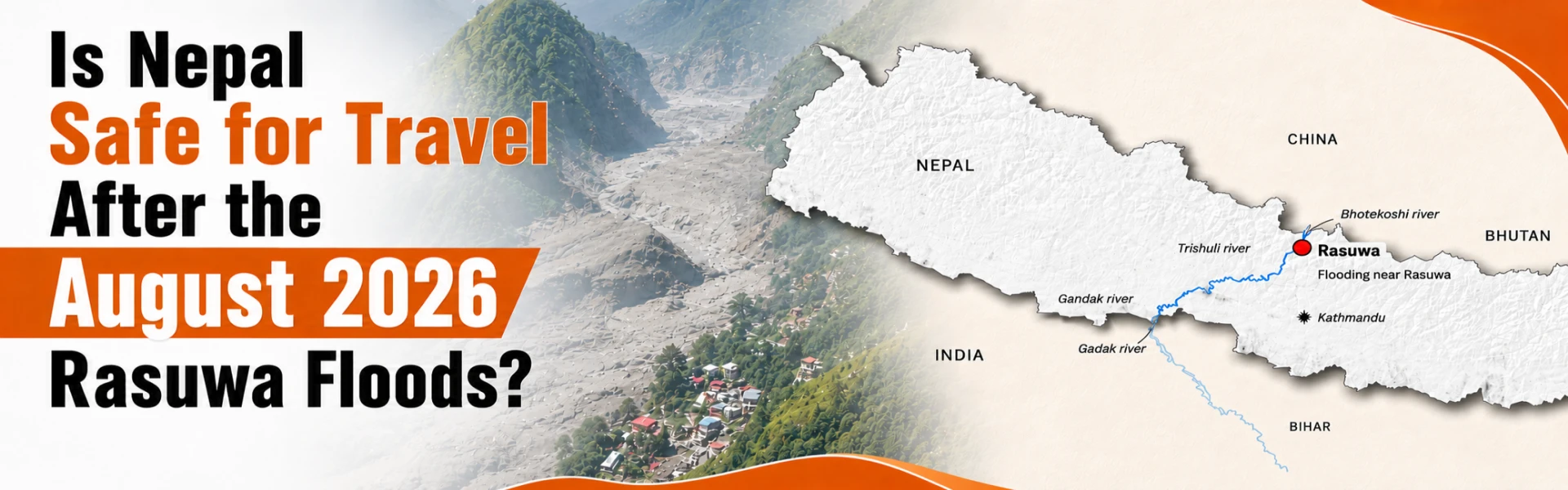
On the morning of 26 August 2026, flash floods and mudslides struck settlements along the Bhote Koshi and Trishuli river system in Rasuwa, Nuwakot, Dhading, Gorkha, Tanahun, Nawalparasi, and Chitwan districts. This is one of the most serious natural disasters Nepal has faced in years, and search and rescue work is still active.
But here's the key point: Kathmandu and Pokhara are about 70 to 100 kilometers away from the flood area, and they use completely different rivers. The Everest and Annapurna trekking routes also use different rivers. None of these places were touched by the flood, so your exact destination and route matter more than any general statement about Nepal travel destinations.
Is Nepal Safe to Visit After the August 2026 Rasuwa Floods?
Yes, for the great majority of destinations and travel plans, Nepal remains open and operating. But this needs a more honest answer than a simple yes or no. The disaster is concentrated along the Bhote Koshi and Trishuli river corridor, running from the Nepal China border in Rasuwa down through Nuwakot and Dhading. Within this corridor, conditions remain serious. Outside it, tourism infrastructure, including Tribhuvan International Airport, hotels, and most trekking trails, is functioning as normal.
A traveller flying into Kathmandu for a cultural tour, a family heading to Pokhara, or a trekker booked on the Everest Base Camp or Annapurna Circuit trail is in a genuinely different situation from someone whose itinerary passes through Syabrubesi, Timure, or Rasuwagadhi. Treating Nepal as one uniform flood zone does a disservice to affected communities, who need attention and support, and to the rest of the country, where responsible tourism continues to support local livelihoods. What matters most right now is not a general opinion about the country, but your specific route, your specific dates, and current official information.
What Happened During the August 2026 Rasuwa Flood?
A sudden surge entered the Lhende Khola, which feeds into the Bhote Koshi and then the Trishuli River, carrying floodwaters south through Nepal. Water levels in the Trishuli reportedly rose by as much as 9 metres in just 30 minutes, and the flash flood swept through the Timure and Syabrubesi areas of Rasuwa, damaging markets, roads, bridges, and hydropower projects. Scientists believe the trigger was linked to a glacier related event near Langtang Lirung, which produced a tremor detected by seismometers worldwide, though the exact chain of causes is still under investigation and should not be treated as fully confirmed.
The scale of loss has been severe and figures are still being updated daily. According to a Nepal government disaster authority situation update reported on the morning of 30 August 2026, 734 bodies and human remains had been recovered in Nepal, with 2,498 people still reported missing. Separately, China has reported seven deaths and 554 people missing in the Tibet Autonomous Region. These numbers are expected to keep changing as identification and recovery work continues, so any specific figure should be treated as a snapshot rather than a final count.
Rescue efforts have been large in scale, with helicopters completing hundreds of trips to reach cut off communities, and teams have also worked to free workers trapped inside tunnels at hydropower sites in Rasuwa. There is also a continuing hazard upstream. A barrier lake formed near the Nepal China border after debris blocked the river, and this lake began overflowing on 28 August. Nepal's Department of Hydrology and Meteorology has said the immediate risk of a sudden lake burst has since fallen, but early on 30 August, disaster authorities again asked people along the Bhote Koshi and Trishuli rivers to stay alert due to a slight rise in water flow. This is an active, evolving situation and not one that has fully concluded.
Detail | Verified Information |
Date of onset | 26 August 2026 |
Primary river corridor | Bhote Koshi into Trishuli River |
Most affected district | Rasuwa, with downstream impact in Nuwakot, Dhading, Gorkha, Tanahun, Nawalparasi, and Chitwan |
Suspected trigger | Under scientific investigation, associated with a glacier related event near Langtang Lirung |
Status as of 30 August | Search, rescue, and recovery operations ongoing, casualty and missing figures still changing |
Upstream hazard | A barrier lake formed near the Nepal China border, gradually releasing water as of the latest update |
Which Parts of Nepal Were Directly Affected?
Destination or Region | Flood Impact | Current Travel Consideration | Traveller Advice |
Rasuwa district (Timure, Syabrubesi, Rasuwagadhi) | Directly and severely affected, ongoing rescue operations | Active disaster zone | Do not travel to this area at this time |
Langtang trekking area, including Gosaikunda | Access route affected due to Syabrubesi damage | Entry currently restricted | Postpone travel until authorities and your operator confirm safe access |
Nuwakot and Dhading districts | Downstream flooding and infrastructure damage | Affected in parts, particularly riverside areas | Avoid riverside areas, check specific location before travel |
Chitwan district | Downstream flooding reported in parts of the district | Mixed, check specific location and lodge | Confirm with your accommodation and operator before arrival |
Kathmandu Valley, including Tribhuvan International Airport | Not in the flood path | Operating normally | Standard monsoon precautions apply |
Pokhara | Not in the flood path | Operating normally | Check Prithvi Highway conditions for overland travel |
Everest region | Different river system, not affected | Operating normally | Standard weather and flight checks before departure |
Annapurna region | Different river system, not affected | Operating normally | Standard trail and weather checks before departure |
Manaslu region | Different access route and river system, not affected | Operating normally | Standard permit and trail checks before departure |
Lumbini | Not named among affected districts | Operating normally | Standard travel checks apply |
Nagarkot | Not affected | Operating normally | Standard travel checks apply |
Is Kathmandu Safe to Visit After the Rasuwa Flood?
Yes. According to the United States Embassy in Nepal, the August 26 flood did not pass through Kathmandu Valley, and Tribhuvan International Airport remains open and handling domestic and international flights normally. Day to day life in Kathmandu, including hotels, restaurants, Durbar Square, Boudhanath, and Swayambhunath, continues as usual. If you are planning general Kathmandu sightseeing, current conditions do not require you to change your plans.
The one thing to watch is road travel out of the valley. Authorities temporarily restricted several routes leading toward Rasuwa, Pokhara, and Chitwan while flood debris was cleared, and while these have since reopened, monsoon conditions can still cause short closures on any given day. If your Kathmandu itinerary includes a day trip or onward overland journey, confirm the specific road with your driver or operator on the morning of travel rather than relying on older information.
Is Pokhara Safe to Visit After the Flood?
Yes. Pokhara sits outside the Bhote Koshi and Trishuli disaster corridor, and its tourist areas, lakeside activities, and domestic flights are operating normally. The main thing that can affect a Pokhara holiday is not the flood itself but the road connecting it to Kathmandu.
The Prithvi Highway runs alongside sections of the Trishuli River for part of its length, and this stretch was closed for several days immediately after the flood while crews cleared mud and debris. Reports from local traffic authorities indicate the highway has since reopened to general traffic, with services resuming in stages, though short closures for landslides remain a normal feature of the Nepal monsoon on this route, independent of the Rasuwa flood. If you are flying between Kathmandu and Pokhara for sightseeing or a holiday, this is unaffected. If travelling by road, ask your operator to confirm same day status before departure. At the moment, probably taking a short domestic flights between Kathmandu and Pokhara, and Kathmandu and Chitwan are better options. For a few days following the landslide at Krishnavir portion of Kathmandu to Pokhara highway on 30th Aug, domestic flight is the only option to avoid a very long byroad journey from Kathmandu to Pokhara. However, the final destinations are perfectly safe to travel.
Are Nepal's Major Trekking Regions Safe After the Rasuwa Flood?
Everest Region
The Everest region drains into the Dudh Koshi river system, which has no connection to the Bhote Koshi corridor, and the route to the Khumbu begins with a flight from Kathmandu or Ramechhap to Lukla, well away from the affected area. Multiple independent reports confirm that Lukla flights and the Everest Base Camp trek are operating on their normal schedule, though the usual seasonal risk of cloud related flight delays into Lukla still applies and is unrelated to Rasuwa.
Annapurna Region
The Annapurna region is fed by the Marsyangdi and Kali Gandaki river systems, separate from the flood corridor, and the Annapurna Circuit Trek, Annapurna Base Camp, Poon Hill, and Upper Mustang are reported to be operating normally by guides on the ground. Travellers wanting to combine the circuit with rafting and a wildlife stop can look at the Annapurna Circuit and Mustang adventure, though the one overland link worth checking either way is the Prithvi Highway between Kathmandu and Pokhara, since some Annapurna departures begin from Pokhara and this road can still see short monsoon closures unrelated to Rasuwa.
Manaslu Region
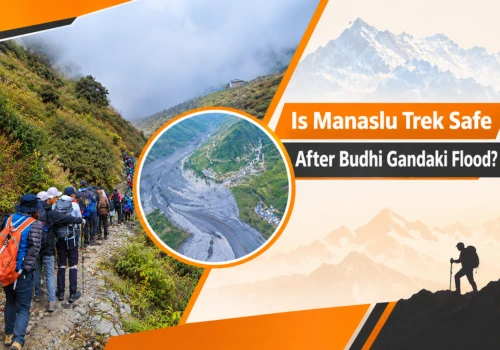
The Manaslu Circuit is accessed from Arughat in Gorkha district, using a different road and river system from the Bhote Koshi corridor, and available reporting does not indicate direct impact on Manaslu trails or access roads. As with all trekking areas in Nepal during monsoon, local landslide and weather risk exists on its own, so confirm current conditions with your guide before departure.
Langtang Region
This is the region needing the most careful attention, since Langtang National Park lies immediately south of Rasuwa and its main access point is Syabrubesi. Syabrubesi was severely affected by the flash flood, with the surge of water, mud, and debris damaging settlements and infrastructure around the town, and the United States Embassy's Rasuwa flooding advisory reports that extensive damage continues to prevent normal travel beyond Dhunche to Syabrubesi, Timure, the Langtang trekking routes, and Rasuwagadhi, with the border crossing at Rasuwagadhi still inaccessible. Do not plan travel into this corridor at this time, and if you already have a Langtang booking, speak with your operator about postponement or a switch to an unaffected region.
Mardi Himal and Other Shorter Treks
The Mardi Himal Trek is accessed from the Pokhara side of the Annapurna range and uses a different river system from the flood corridor, and available information does not indicate any direct impact on this route. As with any short trek in Nepal during monsoon, check current trail conditions, since heavy rain can cause localised trail damage regardless of the Rasuwa situation.
Is It Safe to Travel During Nepal's Monsoon Season?
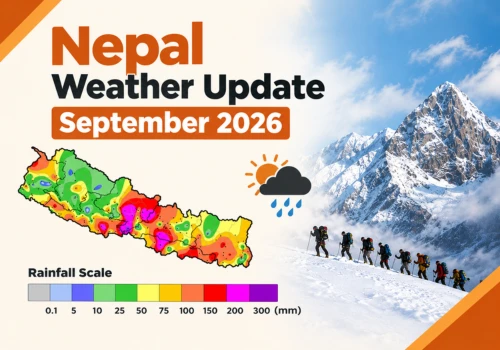
The Rasuwa flood was an extreme and unusual event, but ordinary monsoon risk exists across the entire country from June through September in any normal year, independent of this disaster. Heavy rainfall can trigger landslides on mountain roads at short notice, including the Prithvi Highway and roads approaching trailheads, river crossings on trekking trails can become more difficult after heavy rain, and domestic flights to mountain airstrips such as Lukla and Jomsom can be delayed by poor visibility.
The point to understand is this. A trekking region can sit entirely outside the Rasuwa Bhote Koshi flood zone and still experience a landslide, a delayed flight, or a muddy trail because of ordinary monsoon weather that has nothing to do with the 26 August disaster. Anyone planning a Nepal trekking holiday should check conditions for their own specific route regardless of Rasuwa, because monsoon risk is a normal seasonal factor in Nepal every year.
Nepal Travel Safety Checklist After the Rasuwa Floods
Check official travel updates from Nepali authorities before departure
Confirm current road conditions for your specific route, not general country information
Confirm current trekking trail conditions with your guide or operator
Check domestic and international flight status the day before travel
Use a registered and licensed trekking agency, particularly for remote regions
Follow instructions from local authorities and security personnel at all times
Avoid flooded rivers, riverbanks, and any bridge showing visible damage
Never attempt to cross a blocked road or damaged bridge independently
Keep emergency contact information, including your embassy and Nepal's disaster hotline, saved and accessible
Carry comprehensive travel insurance that covers trip disruption and emergency evacuation
Keep your travel dates flexible where possible
Maintain regular communication with your guide, hotel, or tour operator
Carry appropriate rain protection and quick drying clothing for the season
Avoid unnecessary travel through or near the currently affected districts
What Travellers Should Check Before Leaving for Nepal
What to Check | Why It Matters | Where to Check |
Visa requirements | Entry rules and on arrival visa fees can change | Nepal Department of Immigration |
Trekking permits | Different regions require different permits and fees | Nepal Tourism Board, TAAN, or NTNC |
Road conditions on your route | Monsoon closures and flood related restrictions vary by road | Department of Roads updates, your ground operator |
Flight status | Domestic mountain flights are weather sensitive | Your airline directly, your operator |
Weather forecast | Affects both road and trekking safety | Department of Hydrology and Meteorology |
River conditions near your route | Relevant near any river corridor, particularly in the north | Department of Hydrology and Meteorology, local authorities |
Trail conditions on your specific trek | Trails can change condition quickly in monsoon | Your trekking guide or agency, TAAN |
Government travel advisories | Reflects the latest official safety guidance | Your home country's foreign ministry or embassy in Nepal |
Emergency contact numbers | Needed in case plans change suddenly | Nepal Tourism Board, your embassy, your operator |
Trekking Permits and Entry Requirements
Permit rules in Nepal are not the same across every region, so do not assume one permit covers every trek. For the Everest region, trekkers need the Sagarmatha National Park entry permit, priced at NPR 3,000 (about US$23) for foreign nationals, plus the separate Khumbu Pasang Lhamu Rural Municipality permit, also NPR 3,000, for a combined total of roughly NPR 6,000, or about US$45. A TIMS card is not required in the Khumbu, since the municipality permit replaced it.
For the Annapurna region, including the Annapurna Circuit route, Annapurna Base Camp, Poon Hill, and Mardi Himal, trekkers need the Annapurna Conservation Area Permit, priced at NPR 3,000 (about US$22 to US$25) for foreign nationals and NPR 1,000 for SAARC nationals, with children under 10 exempt. A TIMS card at NPR 2,000 is still commonly issued alongside it, though enforcement on Annapurna checkpoints has become inconsistent in recent seasons, so it is worth confirming current practice with your agency.
Langtang trekking, once access reopens, requires the Langtang National Park entry permit at NPR 3,000 for foreign nationals, along with a TIMS card, since TIMS remains in force for Langtang even though it has been phased out for Everest and Annapurna.
Restricted areas such as Manaslu, Upper Mustang, Nar Phu, Tsum Valley, and Dolpo require a separate Restricted Area Permit that can only be obtained through a registered trekking agency. As of the 2026 season, the Manaslu Circuit permit costs roughly US$100 per person per week from September to November and roughly US$75 per week from December to August, with an additional daily charge for extra days. Since regulatory changes effective March 2026, solo trekkers can now obtain restricted area permits provided they are accompanied by a licensed guide from a registered agency, though independent trekking without a guide is still not permitted anywhere in Nepal, a rule in place since April 2023 across all major conservation areas and national parks.
For the latest official fee schedules, always check the Nepal Tourism Board's trekking permit information page, the NTNC e permit portal for conservation area entry, and the Trekking Agencies' Association of Nepal fee page, since fees and enforcement practices are periodically revised. General visa questions are best confirmed directly on the Department of Immigration's visa information page.
Emergency Contacts and Important Official Resources
Resource | Purpose | What It Provides |
Nepal Tourism Board | Tourism specific updates and traveller support | Coordination with travel agencies on tourist welfare and status checks |
Nepal Police and Tourist Police | General safety, crime, and lost traveller assistance | Direct assistance and reporting for tourists in difficulty |
Department of Hydrology and Meteorology | Weather and flood risk information | Rainfall, river level, and flood warnings |
Your embassy in Nepal, where applicable | Citizen specific safety alerts and consular support | Country specific travel advisories and emergency contact support |
United States Embassy Rasuwa flooding advisory page | Detailed updates specific to the Rasuwa disaster | Road closure lists, safety guidance, and how to report affected citizens |
Nepal government rescue information portal | Official disaster rescue reporting and coordination | Reporting channel connected to national disaster response |
The United States Embassy's Rasuwa flooding advisory gives detailed, regularly updated information on affected roads and safety guidance, useful for travellers of any nationality. The Nepal government's official rescue information portal is the correct channel for reporting people affected by the disaster. We do not publish emergency telephone numbers here that cannot be independently verified as currently active, and we recommend checking these official pages directly for the latest confirmed contact details.
Should You Cancel Your Nepal Trip Because of the Rasuwa Flood?
If your itinerary does not enter the affected area: If your trip involves Kathmandu, Pokhara, Everest, Annapurna, Manaslu, Chitwan, or general cultural travel, and does not pass through Rasuwa or the Langtang access corridor, there is currently no official reason to cancel your entire Nepal trip.
If your itinerary passes through Rasuwa: If your original plan involves Syabrubesi, Timure, Rasuwagadhi, the Langtang trek, or overland travel toward the Nepal China border, do not proceed as originally planned. Speak with your operator about postponing that portion of your trip or substituting an alternative region.
If you are planning a Langtang trek: Because Langtang sits closest to the disaster area, ask your agency for a written status update covering the exact road to Syabrubesi, the trailhead condition, and guide availability, rather than relying on a pre flood itinerary.
If you are travelling during monsoon: Regardless of Rasuwa, monsoon travel in Nepal benefits from flexible dates, a buffer day or two built into your schedule, and a willingness to adjust plans if your operator advises a change due to weather.
How to Travel More Safely in Nepal After a Natural Disaster
Choose transportation with a registered operator who monitors road conditions daily, and for trekking, work with a licensed guide who has current, on the ground knowledge of your specific trail rather than relying on old trip reports. Choose accommodation that can confirm normal operations, keep communication channels open with your operator and family, and purchase travel insurance that explicitly covers emergency evacuation and trip interruption.
Responsible travel also means being mindful of affected communities. Avoid photographing disaster damage in a way that intrudes on people's grief, and do not travel into restricted areas out of curiosity. Communities in Rasuwa and Nuwakot are recovering from real loss, and respectful distance matters as much as physical safety.
Best Nepal Travel Options If You Want a Lower Risk Itinerary
If you would prefer an itinerary that avoids remote road corridors altogether, established, well connected destinations remain a reasonable option, keeping in mind that no destination is entirely risk free during monsoon. A real Nepal tour covering Kathmandu, Bhaktapur, and Patan involves minimal overland travel outside the valley, and a shorter 12 day Nepal holiday works well for travellers with less time to spare. A Nagarkot sunrise experience is a short, well maintained drive from Kathmandu, and those interested in temples and heritage towns beyond the valley might also look at the Bandipur and Gorkha heritage tour, which stays on established roads.
Families may prefer a Nepal family adventure built around Kathmandu and Pokhara rather than remote trekking, and those wanting more comfort can look at a 6 day luxury Nepal holiday for a shorter, more comfortable pace. None of these are risk free, only itineraries that do not depend on the currently restricted Rasuwa corridor.
Final Verdict: Is Nepal Safe for Travel After the Rasuwa Floods?
Nepal should not be judged as a single flood affected country. The August 2026 Rasuwa flood is serious and still happening, mainly along the Bhote Koshi and Trishuli rivers. You should stay away from Syabrubesi, Timure, Rasuwagadhi, and the Langtang trekking area for now. At the same time, Kathmandu, Pokhara, and Nepal's major trekking regions including Everest, Annapurna, and Manaslu are functioning normally and sit outside the flood's path entirely.
The most useful thing you can do right now is check your own destination, your transport route, and your trekking trail against the latest official updates, rather than assuming the whole country is affected. If you are planning a trip and want help reviewing your specific itinerary against current conditions, our team is glad to check route and trail status with you before you travel.
Frequently Asked Questions About Nepal Travel After the Rasuwa Flood
Is Nepal safe to visit after the August 2026 Rasuwa flood?
Most of the country is operating normally, including Kathmandu, Pokhara, and the main trekking regions. Rasuwa district and the Langtang access corridor remain an active disaster area with ongoing search and rescue work, and travel there should be avoided at this time.
Is Kathmandu safe after the Rasuwa flood?
Yes. The flood did not reach Kathmandu Valley, and Tribhuvan International Airport, hotels, and tourist areas are operating as usual. Monsoon precautions still apply, as they would in any normal rainy season.
Is Pokhara affected by the Rasuwa flood?
Pokhara itself was not affected. The main consideration is the Prithvi Highway connecting it to Kathmandu, which had temporary closures after the flood and can still see short monsoon disruptions unrelated to Rasuwa.
Is Everest Base Camp affected by the Rasuwa flood?
No. The Everest region drains into a different river system entirely, and Lukla flights and trail access are reported to be operating normally. Standard seasonal weather checks still apply.
Is Langtang Trek safe after the Rasuwa flood?
No, not currently. Syabrubesi, the main gateway to Langtang, suffered serious damage, and road access beyond Dhunche remains restricted. Postpone any Langtang plans until authorities and your operator confirm safe access.
Should I cancel my Nepal trip?
Only the portion of your itinerary that enters the affected Rasuwa or Langtang corridor needs to change. If your trip does not include these areas, there is currently no official reason to cancel your entire visit.
Are roads in Nepal safe during monsoon?
Roads across Nepal can experience landslide related closures during monsoon, independent of the Rasuwa disaster. Always check same day conditions for your specific route rather than relying on general assumptions.
Are flights to Nepal operating normally?
Yes. Tribhuvan International Airport continues to operate international and domestic flights normally. Mountain airstrips such as Lukla can still see routine weather delays unrelated to the flood.
Do I need travel insurance for Nepal?
Comprehensive travel insurance covering trip interruption, medical care, and emergency evacuation is strongly recommended for any Nepal trip, and particularly important during an active monsoon season with ongoing disaster recovery in one region.
Where can I find official Nepal travel updates?
The Nepal Tourism Board, the Department of Hydrology and Meteorology, your embassy in Nepal, and reputable Nepali news organisations are useful sources, and your trekking or tour operator should also be checking these directly on your behalf.